The Silent Destroyer: How Water Ingress in Lubricating Systems Is Draining US Mine Budgets One Drop at a Time
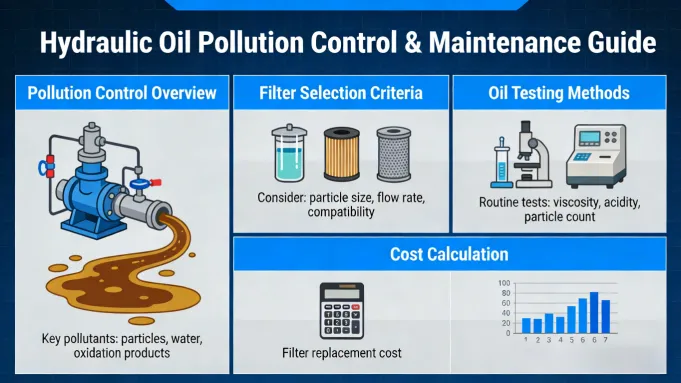
Photo: water contamination hydraulic oil industrial mining equipment maintenance, via www.ayaterfiltration.com
There is a particular kind of equipment failure that frustrates mining engineers more than most: the kind that builds gradually, leaves few obvious warning signs, and by the time it announces itself, has already cost the operation hundreds of thousands of dollars. Water contamination in lubricating systems is exactly that kind of failure—and it is far more prevalent across US mining sites than industry reporting tends to reflect.
At Konya Madeni Yağ, we work with mining operations across multiple continents, and the pattern is consistent: water ingress ranks among the top three causes of premature component failure in both surface and underground environments. Yet it rarely receives the same level of proactive attention as particle contamination or thermal degradation. That oversight is expensive.
How Moisture Finds Its Way In
Water does not need a dramatic entry point to compromise a lubrication system. It exploits the ordinary.
In surface mining environments—open-pit copper and gold operations in Nevada, coal operations in Wyoming's Powder River Basin, or phosphate mining in Florida—temperature cycling is among the most common culprits. As equipment cools overnight, the air inside reservoirs and gearboxes contracts, drawing in ambient moisture through breather vents. In humid climates or during seasonal rain events, that ingested air carries significant water vapor. Over weeks and months, it accumulates.
Underground operations face a different but equally relentless threat. Groundwater seepage, high-humidity environments, and wash-down procedures all create conditions where water can infiltrate hydraulic circuits through degraded seals, poorly fitted filler caps, or damaged hose assemblies. High-pressure wash equipment—used routinely for equipment maintenance—can force water past seals that appear intact under normal operating pressure.
Finally, there is the issue of water-based coolant cross-contamination. In large haul trucks and drilling equipment, coolant leaks into hydraulic systems through heat exchanger failures. This is particularly destructive because coolant carries its own chemical agents that accelerate lubricant degradation beyond what water alone would cause.
The Cascade: What Happens After Water Gets In
Understanding what water actually does inside a lubrication system helps explain why the costs compound so rapidly.
At concentrations as low as 0.1 percent by volume, water begins to reduce the load-carrying capacity of mineral-based lubricants. The oil film that protects metal surfaces under high contact pressure becomes thinner and less stable. Micro-pitting on gear flanks and bearing raceways begins—often invisible to the naked eye during routine inspections.
As concentrations rise above 0.5 percent, the situation deteriorates further. Water promotes oxidation of the base oil, accelerating the formation of acidic byproducts and varnish deposits. Rust and corrosion develop on ferrous components. Additive packages—particularly anti-wear and extreme-pressure agents—hydrolyze and lose effectiveness, leaving metal surfaces increasingly vulnerable.
Above one percent water content, free water begins to separate from the lubricant. At this stage, the oil is no longer functioning as a coherent protective fluid. Hydraulic pump cavitation becomes a real risk. Gear systems begin to experience abnormal wear rates. Bearing temperatures rise. And then, often with little additional warning, components fail.
A mid-size underground mining operation in the western United States documented a hydraulic excavator requiring complete hydraulic pump replacement after a water ingress event traced to a failed breather cap. The direct repair cost exceeded $85,000. When lost production during the 11-day repair window was factored in, the total impact approached $340,000. The breather cap itself costs less than $40.
Detection Methods That Mine Operators Can Implement Today
The good news is that water contamination is detectable well before it reaches catastrophic concentrations—provided the right monitoring protocols are in place.
Karl Fischer Titration remains the gold standard for quantifying water content in lubricating oils. It measures water in parts per million with high accuracy and is available through most oil analysis laboratories that serve industrial clients. For critical assets—primary hydraulic systems on shovels, haul truck transmissions, large gearboxes—quarterly Karl Fischer analysis should be considered a baseline requirement, not an optional expense.
Crackle Testing offers a rapid field-level check. A small oil sample is placed on a hot plate at approximately 150°C. If the oil crackles or spatters, free or emulsified water is present at detectable levels. This test does not quantify contamination, but it provides an immediate go/no-go signal that any maintenance technician can perform in the field.
Inline Moisture Sensors represent the frontier of real-time contamination management. These devices, installed directly in hydraulic circuits or reservoir return lines, provide continuous relative humidity readings within the oil. When moisture levels exceed a defined threshold, alerts are generated before concentration reaches damaging levels. The return on investment for these sensors on high-value equipment is typically measured in months, not years.
Routine Visual and Physical Inspection should not be discounted. Milky or cloudy oil is a reliable indicator of emulsified water. Rust staining on reservoir walls, unusual foaming during operation, and unexplained increases in operating temperature are all secondary indicators worth investigating.
Building a Preventive Moisture Management Framework
Detection is only one part of the equation. Preventing water ingress from occurring—or limiting its impact when it does—requires a structured approach.
Upgrading reservoir breathers from standard mesh-type units to desiccant breathers is one of the highest-impact, lowest-cost interventions available. Desiccant breathers actively absorb moisture from air entering the reservoir, significantly reducing the volume of water introduced through the breathing cycle. Properly sized desiccant breathers on a large hydraulic excavator reservoir can reduce water ingress by over 80 percent in high-humidity environments.
Seal inspection and replacement programs should be aligned with operating hour intervals rather than calendar schedules. In abrasive, high-cycle mining environments, seals degrade faster than manufacturer intervals designed for more controlled industrial settings. A seal that is technically within its service life may already be allowing measurable moisture infiltration.
For operations using water-based hydraulic fluids—common in underground mining due to fire resistance requirements—careful attention to fluid concentration management is essential. Water-based fluids require regular monitoring to maintain correct water-to-concentrate ratios; improper dilution can itself introduce corrosion and microbial contamination risks.
Advanced filtration plays a critical role as well. High-efficiency kidney-loop filtration systems, equipped with water-absorbing filter elements, can continuously reduce both particle and moisture contamination in reservoir fluid. At Konya Madeni Yağ, our industrial filtration product line—developed against the demanding operating conditions of Turkish industrial and mining environments—is engineered to address exactly these combined contamination challenges. These solutions are increasingly being adopted by US operations seeking reliable, cost-effective moisture management tools that perform under real-world conditions.
The Cost-Benefit Case Is Straightforward
Mine operators who have implemented comprehensive moisture management programs consistently report measurable outcomes: extended component life on hydraulic pumps and motors, reduced bearing replacement frequency, lower lubricant consumption due to extended drain intervals, and fewer unplanned shutdowns.
A structured program—covering upgraded breathers, inline moisture monitoring on critical assets, quarterly oil analysis, and enhanced filtration—typically costs between $15,000 and $50,000 annually for a mid-size operation, depending on fleet size. Against the documented cost of a single major hydraulic failure event, the math is not complicated.
Water ingress does not make headlines the way catastrophic mechanical failures do. It does not announce itself. But across thousands of US mining operations, it is quietly consuming maintenance budgets, shortening component life, and compressing already-thin operating margins. The mines that take it seriously—and build systems to detect and prevent it—are the ones that maintain a competitive edge when commodity prices tighten and every dollar of operational efficiency matters.
The drop that sabotages a system rarely looks dangerous. That is precisely what makes it so costly.