When the Pipeline Runs Dry: How US Mining Operations Are Rethinking Lubricant Procurement in an Era of Supply Chain Volatility
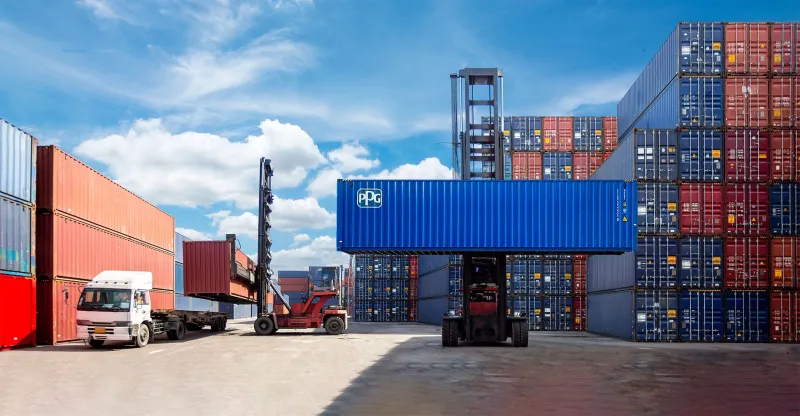
Photo: industrial lubricant warehouse supply chain shipping containers port freight, via assets-eu-01.kc-usercontent.com
For decades, procurement managers at US mining operations treated lubricant supply as a solved problem. You placed an order, the product arrived, and the machines kept running. That assumption collapsed somewhere between 2020 and the present, as a cascade of global disruptions — pandemic-era port congestion, raw material shortages, geopolitical friction, and shipping container imbalances — rewrote the rules of industrial supply chains in ways that are still being felt on mine floors across the country.
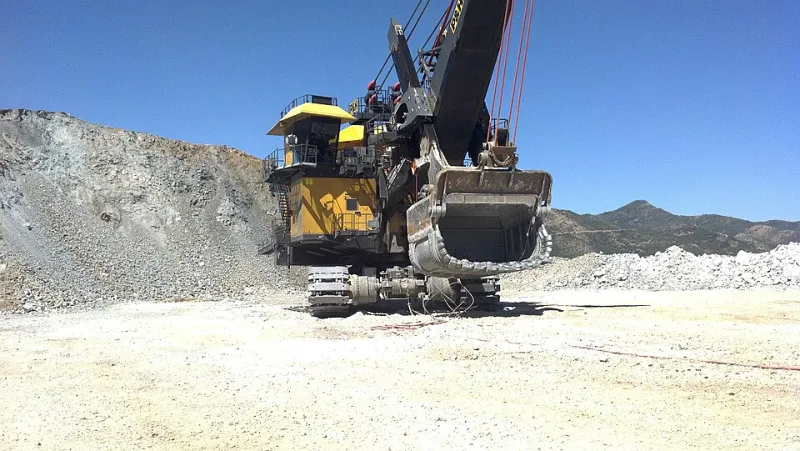
Today, lead times that once stretched two to four weeks now frequently extend to three months or longer. For an open-pit copper mine in Arizona or a coal operation in Wyoming, that gap between order and delivery isn't an inconvenience — it's a potential production crisis.
The question facing operations managers is no longer simply "which lubricant performs best?" It has evolved into something more strategically complex: "Which supplier can actually get me product when I need it?"
The Anatomy of a Supply Chain Breakdown
To understand why lubricant procurement has become so fraught, it helps to trace the problem upstream. Base oil — the foundational component of virtually every industrial lubricant — is primarily derived from petroleum refining. When refinery output fluctuates, as it did sharply during pandemic-era demand shocks, the downstream effects ripple through the entire lubricant manufacturing sector.
Additive packages, which give lubricants their performance characteristics — extreme-pressure resistance, thermal stability, anti-wear properties — rely on chemical inputs sourced from a relatively small number of global suppliers. Disruptions at any node in that chain create shortages that major blending facilities struggle to absorb.
Layered on top of these raw material pressures are the well-documented challenges in ocean freight: port congestion, container shortages, and rate volatility that have made international shipping both slower and significantly more expensive than historical norms.
For US mining operations that rely on a single domestic supplier or a narrow roster of vendors, these conditions have created a procurement environment with very little margin for error.
Why Turkish Manufacturers Have Entered the Conversation
Turkey's industrial lubricant sector has grown substantially over the past two decades, driven by domestic demand from its own robust mining and manufacturing base. Manufacturers operating in the Konya region and beyond have developed production capabilities that meet or exceed international quality standards, including ISO certifications and compliance with major OEM specifications.
What makes Turkish suppliers particularly relevant to the current US procurement challenge is a combination of factors that go beyond product quality alone.
First, Turkey's geographic position — bridging Europe and Asia — gives it access to diverse raw material sources, reducing the single-point-of-failure risk that plagues suppliers dependent on one regional supply chain.
Second, Turkish manufacturers have invested significantly in production capacity over the past decade. Where some suppliers are rationing allocations to existing customers, manufacturers like Konya Madeni Yağ have maintained the output flexibility to accommodate new buyers without compromising delivery commitments.
Third, and perhaps most practically relevant to US procurement teams, pricing from Turkish sources has remained competitive even as domestic and Western European alternatives have seen cost increases driven by energy prices and raw material premiums.
Mid-Project Supplier Transitions: Lessons from the Field
Switching lubricant suppliers mid-project is not a decision any operations manager takes lightly. Equipment warranties, established maintenance protocols, and the institutional knowledge embedded in a maintenance team all create legitimate inertia around existing supplier relationships.
Yet the past few years have forced exactly these transitions at operations that simply could not wait out extended lead times from their incumbent vendors.
One instructive pattern has emerged from operations that navigated these transitions successfully: the importance of technical compatibility assessment before any product changeover. Lubricants are not universally interchangeable, and a switch made purely on availability grounds — without verifying viscosity grades, additive chemistry compatibility, and OEM approval status — can create equipment problems that dwarf the original supply disruption.
Operations that handled mid-project transitions well typically followed a structured process: they requested full technical data sheets from prospective new suppliers, cross-referenced those specifications against OEM requirements for their specific equipment, and where possible ran parallel testing on non-critical systems before committing to a full fleet changeover.
The logistics dimension of these transitions also required careful management. Coordinating international shipments involves customs documentation, import duties, and freight scheduling that differ meaningfully from domestic procurement. Operations that engaged experienced freight forwarders with established Turkey-to-US shipping lanes were able to compress the logistical learning curve considerably.
Building a Procurement Strategy That Doesn't Depend on Perfect Conditions
The broader lesson from the supply chain disruptions of recent years is that procurement resilience requires deliberate architecture, not reactive improvisation. For mining operations looking to harden their lubricant supply chains, several strategic principles have proven their value.
Diversify your supplier base. Relying on a single vendor — regardless of how strong that relationship has historically been — creates concentration risk that supply chain conditions can exploit. Maintaining approved-supplier status with at least two or three qualified vendors, including at least one international option, provides meaningful flexibility when one source encounters constraints.
Extend your inventory horizon. The just-in-time inventory models that worked well in stable supply environments have shown their vulnerabilities. Mining operations are increasingly moving toward safety stock levels that reflect realistic worst-case lead times rather than historical averages. For critical lubricants used in high-wear applications — dragline systems, haul truck drivetrains, hydraulic circuits on heavy excavators — carrying sixty to ninety days of inventory rather than thirty is a defensible cost when weighed against the expense of an unplanned shutdown.
Establish supplier relationships before you need them urgently. The operations that transitioned to Turkish suppliers most smoothly were those that had done preliminary qualification work in advance, even before an acute shortage materialized. Vetting a supplier under pressure, with equipment sitting idle, is a poor negotiating position and a poor basis for a rigorous technical assessment.
Understand your import logistics. For US operations new to sourcing from Turkey, the import process has a learning curve. Working through a customs broker experienced in industrial chemical imports, understanding the relevant Harmonized Tariff Schedule codes, and building relationships with freight forwarders who have established carrier relationships on the relevant trade lanes all reduce friction when time matters most.
The Strategic Calculus for 2025 and Beyond
Supply chain analysts broadly agree that the extreme volatility of the early 2020s has moderated, but few are willing to declare a return to the frictionless procurement conditions that preceded that period. Geopolitical uncertainty, ongoing energy market volatility, and the structural complexity of global chemical supply chains mean that disruption risk remains elevated relative to historical norms.
For US mining operations, this environment makes supplier diversification and geographic sourcing flexibility not just prudent but arguably essential to operational resilience. Turkish lubricant manufacturers have demonstrated — through the stress test of recent years — that they can deliver quality product reliably at competitive price points, even when other parts of the global supply chain are under strain.
At Konya Madeni Yağ, we have worked directly with US operations navigating exactly these procurement challenges, providing technical documentation, sample programs, and logistics support designed to make international sourcing as straightforward as possible. The supply chain environment has changed. The procurement strategies that served the industry well in a simpler era deserve a hard look — and in many cases, a meaningful update.