Hidden in Plain Sight: Why Independent Lubrication Audits Are the Diagnostic Tool US Mining Operations Can No Longer Afford to Skip
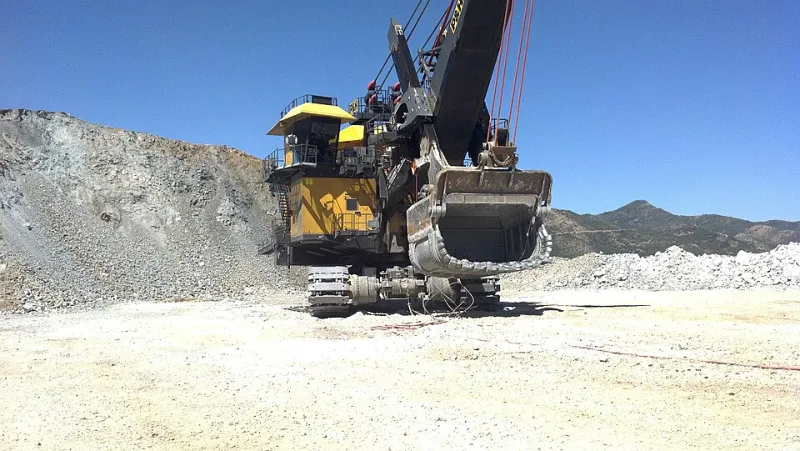
Photo: Syced, CC0, via Wikimedia Commons
There is a particular kind of operational blind spot that develops gradually — not from negligence, exactly, but from familiarity. When a maintenance crew has been working the same equipment on the same site for years, certain practices calcify into habit. Lubricants get ordered the way they always have been ordered. Application intervals stay where someone set them a decade ago. And the slow, compounding cost of that inertia rarely appears on any single line item in a quarterly report.
This is precisely the environment in which a third-party lubrication audit delivers its greatest value — and precisely the environment in which most US mine operators find reasons to delay scheduling one.
The Audit Avoidance Pattern
Industry conversations consistently surface the same rationale for skipping independent assessments: operations are running, machines are producing, and bringing in outside evaluators feels disruptive and expensive. There is also an element of institutional pride. Maintenance managers who have built their programs from the ground up are understandably reluctant to invite scrutiny.
But avoidance carries its own price. According to lubrication engineering data cited across the tribology literature, improper lubrication — whether through wrong product selection, incorrect viscosity grades, over- or under-application, or contamination — contributes to a significant share of premature bearing and gear failures in heavy industrial settings. In mining specifically, where equipment operates under extreme load cycles, abrasive conditions, and wide temperature swings, those failure rates translate directly into unplanned downtime and accelerated capital expenditure.
The audit does not create these problems. It simply makes them visible.
Red Flags That Signal an Assessment Is Overdue
Not every operation will display the same warning signs, but several patterns reliably indicate that a lubrication program has drifted from best practice:
Recurring failures on specific equipment classes. When the same bearing types or hydraulic components fail repeatedly across a fleet, the instinct is often to blame product quality or supplier consistency. Frequently, however, the root cause is a systemic application error or an outdated specification that no longer matches current operating demands.
Lubricant proliferation. A well-managed site typically requires a rationalized inventory of products matched carefully to application needs. When auditors find dozens of partially used drums representing overlapping or redundant specifications, it signals that purchasing decisions have been made reactively rather than strategically — a pattern that inflates inventory costs and increases the risk of cross-contamination.
No documented oil analysis program. Routine used-oil sampling is one of the most cost-effective predictive maintenance tools available. Sites operating without it are, in effect, flying blind with respect to lubricant condition and contamination levels.
Maintenance intervals set by calendar rather than condition. Changing lubricants on a fixed schedule regardless of actual fluid condition wastes product and labor while potentially leaving degraded lubricant in service longer than the schedule accounts for under heavy-use conditions.
Absence of a formal lubrication specification document. If no written standard governs which products go where, at what volumes, and on what schedule, consistency depends entirely on individual technician memory — a fragile foundation for any serious operation.
What a Comprehensive Third-Party Audit Actually Examines
A thorough independent assessment goes well beyond checking whether the right product is being applied to a given machine. At its most complete, the audit encompasses several interconnected layers.
The equipment survey maps every lubrication point across the operation, cross-referencing OEM specifications against current practice to identify gaps or deviations. This frequently uncovers situations where a machine has been upgraded or modified but the lubrication specification was never updated to reflect changed load or temperature conditions.
The product rationalization review evaluates the full lubricant inventory against actual application requirements. This step routinely identifies opportunities to consolidate to fewer, better-selected products — reducing storage complexity, lowering procurement costs, and minimizing the risk of misapplication.
The storage and handling assessment examines how lubricants are received, stored, and dispensed. Contamination introduced during handling — water ingress, particulate matter, cross-contamination between product types — is responsible for a substantial share of lubricant-related failures, yet storage practices are rarely subjected to the same scrutiny as product selection.
The oil analysis data review, where records exist, examines historical trends to identify patterns of contamination, additive depletion, or viscosity breakdown that may not yet have caused visible failures but indicate a system under stress.
Finally, the technician competency component evaluates whether the personnel responsible for lubrication tasks have received adequate training and whether that training is consistently applied in the field.
The Value of an External Perspective
Internal audits have their place, but they carry an inherent limitation: the people conducting them are embedded in the same assumptions and habits that may be generating the problems. A third-party assessor — particularly one with experience across multiple mining sectors and geographies — brings comparative context that internal teams cannot replicate.
At Konya Madeni Yağ, our engagement with US mining clients has repeatedly demonstrated that the most valuable findings in an audit are not the obvious failures but the subtle misalignments: the gear oil specified for ambient temperatures that no longer reflects current operating conditions after a processing expansion, the grease interval that made sense for a previous machine configuration but not for the retrofitted one currently in service. These are the findings that prevent the next major failure rather than simply explaining the last one.
Turkish industrial lubricant expertise, developed across demanding mining and manufacturing environments in the Konya region and exported to markets worldwide, has proven particularly well-suited to identifying these nuanced discrepancies. The engineering rigor applied to formulating lubricants for challenging conditions translates directly into the diagnostic acuity needed to assess complex, high-demand applications.
Turning Findings into Measurable Outcomes
An audit that produces a report and nothing more has limited value. The operational benefit comes from the implementation phase — translating findings into a revised lubrication specification, a rationalized product list, an updated maintenance schedule, and a training protocol that ensures the new standard is actually followed in the field.
Mine operators who have completed this cycle consistently report measurable outcomes: reduced lubricant consumption, fewer unplanned equipment failures, lower parts replacement frequency, and in some cases, meaningful reductions in total maintenance labor hours. These are not theoretical benefits. They are the direct result of replacing assumption-based practice with evidence-based management.
The Cost of Continued Postponement
Every quarter that passes without an audit is a quarter in which correctable inefficiencies continue to accumulate cost. The bearings wearing faster than they should, the hydraulic fluid degrading ahead of schedule, the inventory of redundant products tying up working capital — none of these problems resolve themselves.
The lubrication audit is not a disruption to operations. Conducted properly, it is one of the most targeted investments an operation can make in its own continuity. For US mine operators who have been finding reasons to delay, the more relevant question may not be whether they can afford to schedule one — but whether they can continue to afford not to.