Terrain, Temperature, and Tribology: A Region-by-Region Lubrication Guide for US Mine Operators
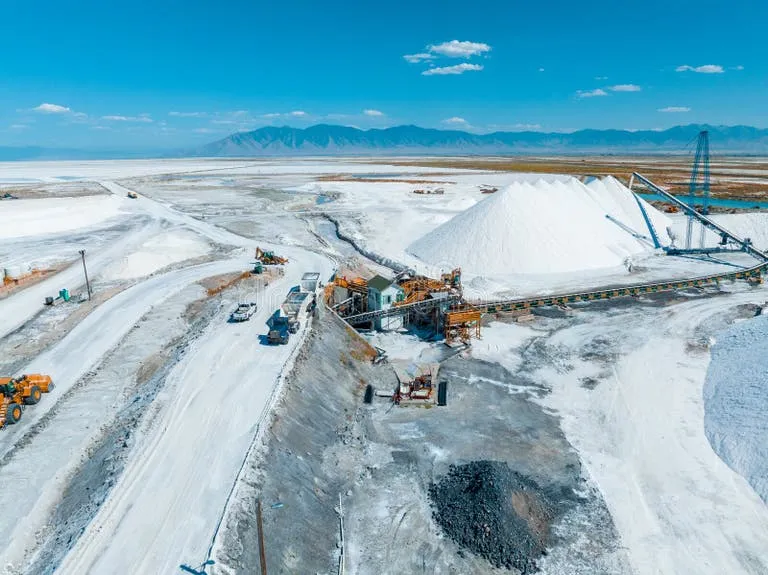
Photo: mining operations diverse climates desert mountain swamp industrial equipment, via thumbs.dreamstime.com
Lubrication strategy in mining is not a universal prescription. The same gear oil that performs flawlessly in a Nevada open-pit operation may fail prematurely in a Louisiana lignite mine, and the grease specification that protects bearings through an Alaskan winter would be unnecessary overkill — and potentially problematic — in a New Mexico potash facility. Geography matters, and so does the seasonal calendar.
This guide is designed as a practical operational reference for maintenance supervisors and engineers working across the diverse climatic zones where American mining activity is concentrated. For each region, we identify the dominant environmental stressors, their specific effects on lubricant performance, and the product characteristics that address them most effectively.
Desert Operations: The Southwest Copper and Potash Belt
Primary states: Arizona, New Mexico, Nevada, Utah
Southwest mining environments present a deceptively complex lubrication challenge. Surface temperatures in open-pit copper and potash operations routinely exceed 110°F during summer months, and equipment operating continuously in direct sunlight — haul trucks, shovels, conveyor drives — experiences component temperatures that push significantly higher than ambient.
Heat is the primary enemy of lubricant integrity in desert operations. Elevated temperatures accelerate oxidation, thin oil viscosity, and cause lighter base oil fractions to volatilize, leaving behind thickened residues that impede flow and reduce film strength. For hydraulic systems in particular, viscosity drift under thermal load can compromise actuator response and pump efficiency.
Operational recommendations for desert environments:
- Select high-viscosity-index (HVI) hydraulic fluids that maintain stable viscosity across a wide temperature range. A fluid with a VI of 150 or higher will resist thinning at peak operating temperatures far better than a conventional mineral oil at VI 95–100.
- Use oxidation-inhibited gear oils with robust antioxidant additive packages for final drives and gearboxes. Extended drain intervals are not advisable in extreme heat; monitor oil condition through regular sampling and reduce intervals accordingly during summer months.
- Grease selection should prioritize high-temperature dropping points. A lithium complex or polyurea-based grease with a dropping point above 500°F provides substantially better protection for wheel bearing and pin applications than standard lithium soap greases.
- Implement seasonal changeover protocols in the spring, transitioning from winter-grade fluids before sustained heat arrives rather than after equipment begins showing thermal stress symptoms.
Alpine and High-Elevation Operations: The Rocky Mountain Hard-Rock Sector
Primary states: Montana, Colorado, Idaho, Wyoming
High-elevation mining in the Rockies presents the inverse challenge: cold. Operations at elevations above 8,000 feet — including many of Montana's historic hard-rock mines and Colorado's molybdenum and gold operations — must contend with overnight temperatures that can drop well below 0°F even in shoulder seasons, combined with dramatic diurnal temperature swings that stress seals, hoses, and fluid systems.
Cold-start behavior is the critical lubricant performance parameter in alpine environments. A mineral gear oil with a pour point of -15°F may appear adequate on a specification sheet, yet still flow sluggishly enough at cold-start to allow metal-on-metal contact during the critical first minutes of operation — the period when a disproportionate share of component wear occurs.
Operational recommendations for alpine environments:
- Specify synthetic or semi-synthetic formulations for hydraulic systems and gearboxes. Full-synthetic PAO-based gear oils maintain pumpability at temperatures 20–30°F lower than equivalent mineral products and recover viscosity more predictably as operating temperature climbs.
- Evaluate arctic-grade hydraulic fluids for equipment that must operate or be started at sub-zero ambient temperatures. These formulations are engineered for low-temperature fluidity without sacrificing high-temperature film strength.
- Grease consistency selection is critical. In cold climates, NLGI Grade 1 or even Grade 0 greases may be necessary for centralized lubrication systems to ensure adequate pump delivery at low temperatures. Grade 2 greases, standard in temperate applications, can become too stiff for reliable auto-lube system function below approximately -10°F.
- Protect storage. Lubricant drums and totes stored outdoors at high elevation are subject to freeze-thaw cycling that can affect product consistency and introduce condensation contamination. Indoor or climate-controlled storage is not a luxury in these environments — it is a maintenance requirement.
Wetland and Gulf Coast Operations: Humidity, Corrosion, and Biological Contamination
Primary states: Louisiana, Mississippi, Texas Gulf Coast
Lignite mining and sulfur extraction operations in the Gulf Coast region face environmental conditions that have less to do with temperature extremes and more to do with pervasive moisture. Relative humidity regularly exceeds 90%, standing water is a constant presence, and biological contamination — microbial growth in lubricant reservoirs and sumps — is a genuine operational hazard that inland operations rarely encounter.
Water contamination is the defining threat in wetland mining environments. Even small amounts of water ingress into gear oil or hydraulic fluid can dramatically accelerate rust and corrosion, reduce lubricant film strength, and create emulsification that renders the product ineffective. In hydraulic systems, water contamination also promotes cavitation and can compromise servo valve function.
Operational recommendations for wetland environments:
- Prioritize lubricants with superior demulsibility — the ability to shed water quickly rather than emulsify with it. In gear applications, water-separating gear oils allow free water to settle and be drained before it can cause damage.
- Deploy desiccant breathers on all gearbox and reservoir vents. Standard breathers allow moisture-laden air to enter as equipment cycles through temperature changes; desiccant breathers absorb this moisture before it reaches the lubricant.
- Monitor for microbial contamination through regular oil analysis that includes microbial culture testing. Sulfate-reducing bacteria are particularly problematic in Gulf Coast environments and can accelerate corrosion from within fluid systems.
- Use corrosion-inhibited greases for all exposed pin, pivot, and bearing applications. EP greases with strong rust-inhibitor additive packages provide substantially better protection in high-humidity environments than standard formulations.
Seasonal Maintenance Transitions: A Cross-Regional Principle
Regardless of geography, one principle applies universally: seasonal lubricant changeovers should be proactive, not reactive. Waiting until equipment exhibits symptoms of thermal stress, cold-start difficulty, or moisture-related damage before adjusting the lubrication program is a strategy that trades minor savings on labor for major exposure to component failure.
At Konya Madeni Yağ, our product range is formulated to address exactly the kind of performance breadth that US mining geography demands. Our engineering team works with operators to match product specifications to regional and seasonal requirements — not simply to catalog specifications, but to the actual operating profiles of the equipment and environments involved.
Building a Geography-Aware Lubrication Program
The most resilient lubrication programs in US mining share a common structure: they begin with a documented assessment of the operating environment, map that environment to specific performance requirements, and then select products accordingly. They also build in a review cycle that accounts for seasonal shifts and uses oil analysis data to validate that the selected products are performing as expected under real conditions.
For mine operators managing facilities across multiple states or climate zones, this may mean maintaining several distinct product specifications rather than standardizing on a single product for convenience. The administrative simplicity of a one-size-fits-all approach rarely survives contact with the financial reality of region-specific equipment failures.
America's mining geography is diverse. Lubrication strategy should be too.