The True Price Tag of a Broken Machine: A Practical Lubrication Guide for US Mine Operators
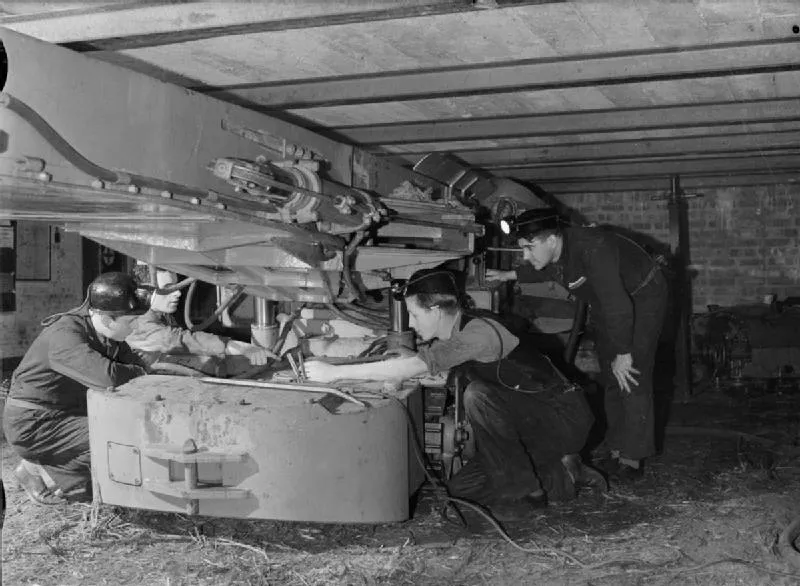
Photo: Ministry of Information Photo Division Photographer, Public domain, via Wikimedia Commons
When the Machine Stops, the Losses Don't
There is a number that tends to get the attention of mine managers immediately: $180,000. That is a conservative industry estimate for the cost of a single hour of unplanned downtime on a large haul truck in an active surface mining operation, when you factor in lost production, emergency labor, expedited parts procurement, and the cascading effect on downstream processing. For underground operations running continuous miners or longwall systems, the figure can be substantially higher.
Yet despite the staggering financial exposure that equipment downtime represents, lubrication management — one of the most reliable and cost-effective tools for preventing it — remains underfunded and under-systematized at a surprising number of US mining operations. This guide is intended to change that, offering maintenance teams a structured framework for building a lubrication program that protects equipment, reduces downtime, and delivers measurable return on investment.
Understanding Where the Money Goes
Before building a better lubrication program, it helps to understand the full cost architecture of equipment failure. Most mine maintenance budgets account for direct repair costs — parts, labor, and equipment rental. Fewer systematically capture the indirect costs, which often dwarf the direct ones.
Direct costs of unplanned downtime:
- Emergency parts procurement (frequently at premium pricing with expedited freight)
- Overtime labor for emergency repair crews
- Crane or rigging equipment rental for major component removal
- Consumables and fluids associated with the repair
Indirect costs of unplanned downtime:
- Lost production tonnage and the revenue it represents
- Contractual penalties for missed delivery or processing targets
- Idle time for downstream equipment and personnel waiting on the failed unit
- Accelerated wear on backup equipment pressed into extended service
- Morale and retention impacts on maintenance teams managing repeated crises
Industry research from the Society for Mining, Metallurgy and Exploration (SME) consistently identifies lubrication-related failures — including contamination, starvation, incorrect viscosity selection, and degraded fluid — as contributors to between 40 and 50 percent of all premature bearing and gear failures in mining equipment. That is not a peripheral issue. It is a central one.
The Lubrication Audit: Where Every Program Should Start
Before a mine operator can improve its lubrication practices, it needs an honest assessment of where those practices currently stand. A structured lubrication audit covers the following dimensions:
Inventory and Consolidation
Many mining operations carry an unnecessarily large number of lubricant products — sometimes 30 or more distinct SKUs across a fleet. This complexity creates storage challenges, increases the risk of cross-contamination and misapplication, and complicates procurement. A well-designed audit will typically identify opportunities to consolidate to 12 to 18 products without sacrificing equipment protection, simplifying handling and reducing the chance of human error.
Application Verification
Are the right products being applied to the right components? This sounds like a basic question, but in the real-world environment of a busy mine shop — with multiple equipment brands, high crew turnover, and the pressure to get machines back in operation quickly — misapplication is more common than most maintenance managers would like to admit. Application charts and color-coded dispensing systems are simple, low-cost tools that significantly reduce this risk.
Contamination Control Assessment
Contamination — whether from water, dust, or cross-mixing of incompatible products — is the single most common cause of lubricant degradation in mining environments. The audit should evaluate storage conditions, transfer equipment cleanliness, filter ratings in hydraulic systems, and breather specifications on gearboxes and reservoirs.
Interval Review
Are drain and regreasing intervals based on OEM recommendations, actual operating conditions, or simply habit? Many operations are either changing fluids too frequently (wasting money) or not frequently enough (risking failure). Used oil analysis data, where it exists, should be reviewed to calibrate intervals to actual fluid condition rather than arbitrary schedules.
Building a Preventive Lubrication Schedule: A Working Checklist
The following checklist framework is applicable to most surface and underground mining equipment fleets. It should be adapted to specific OEM requirements and operating conditions.
Daily (each shift or every 8–10 hours):
- Visual inspection of all grease points for purge and condition
- Check hydraulic fluid levels on all active equipment
- Inspect for visible leaks at hose fittings, seals, and reservoirs
- Verify automatic lubrication system function (where installed)
- Document any abnormal findings in the maintenance management system
Weekly (every 40–50 operating hours):
- Manual regreasing of all scheduled points not covered by auto-lube systems
- Hydraulic filter differential pressure check
- Inspect grease lines and fittings for damage or blockage
- Check gearbox oil levels and inspect for water contamination (milky appearance)
Monthly (every 200–250 operating hours):
- Pull oil samples from all major gearboxes and hydraulic systems for used oil analysis
- Review analysis results against established wear metal and contamination thresholds
- Inspect and clean breathers on all enclosed lubricated systems
- Verify lubricant storage area organization and product labeling
Quarterly / Seasonal:
- Full review of lubricant product specifications against any new equipment additions
- Evaluate whether viscosity grades remain appropriate for seasonal temperature changes
- Review drain interval data against used oil analysis trends — adjust if warranted
- Assess total lubricant consumption against benchmarks and investigate anomalies
Why Premium Lubricants Deliver Better ROI Than Generic Alternatives
There is a persistent tendency in procurement to treat lubricants as a commodity — to optimize for the lowest unit price and assume that any product meeting the minimum specification will perform equivalently. This logic is understandable but flawed, and the financial consequences of acting on it are often invisible until a major failure occurs.
Premium industrial lubricants from specialized manufacturers — including Turkish producers such as Konya Madeni Yağ, whose formulations are engineered specifically for heavy industrial and mining applications — deliver ROI through several mechanisms that generic products cannot match:
Extended component life: Superior additive chemistry reduces wear rates on high-load components, extending the interval between major rebuilds. On a haul truck final drive worth $85,000 to replace, even a 15 percent extension in service life represents significant capital preservation.
Longer drain intervals: Premium products maintain their protective properties longer, reducing the frequency of fluid changes and the associated labor, disposal, and downtime costs.
Reduced filter consumption: Better contamination control and oxidation stability means filters last longer and hydraulic system cleanliness is easier to maintain.
Lower total fluid consumption: High-quality base oils and seal-compatible additive systems reduce consumption through evaporation and leakage, cutting total fluid spend.
When these factors are quantified and aggregated, premium lubricants typically cost less per operating hour than generic alternatives — even when their per-gallon price is higher. The math is not complicated; it simply requires looking beyond the purchase order.
Making the Case Internally
For maintenance managers who understand the value of a stronger lubrication program but face budget pressure from above, the most effective argument is always financial. Build a simple model: take your fleet's current unplanned downtime frequency, apply an industry-standard cost-per-hour figure for your equipment class, and calculate the annual exposure. Then quantify the investment required to implement the preventive program described above — better products, used oil analysis, improved storage and dispensing infrastructure.
In virtually every case, the return on a well-designed lubrication program exceeds 5:1 within the first year. That is the kind of ROI that gets budget approved.
The Bottom Line
Equipment downtime is not inevitable. A significant portion of it is preventable through disciplined, science-based lubrication management. The tools are available: high-performance lubricants from specialized manufacturers, used oil analysis programs, structured maintenance schedules, and contamination control systems. What is required is the organizational commitment to implement them systematically and the willingness to evaluate lubricant selection on total cost of ownership rather than unit price alone. For US mine operators serious about protecting their equipment and their margins, the lubrication program is one of the highest-leverage investments available.