Silica, Dust, and the Fight for Uptime: Advanced Lubrication Strategies for Open-Pit Mining Environments
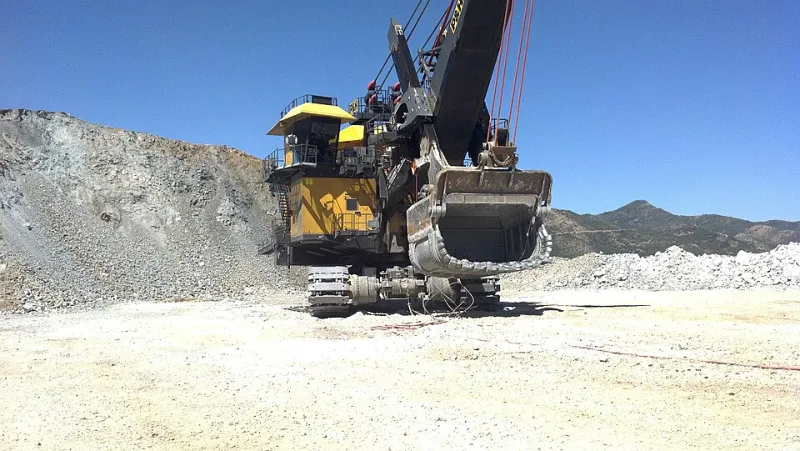
Photo: Jet6581, CC BY-SA 3.0, via Wikimedia Commons
Across the copper pits of Arizona, the gold operations of Nevada, and the potash fields of New Mexico, one adversary consistently tops the list of equipment maintenance concerns: dust. More specifically, fine silica particulate — the invisible abrasive that infiltrates lubricated systems, degrades oil films, and quietly accelerates the destruction of bearings, gears, and hydraulic components. For open-pit mine operators managing fleets of haul trucks, excavators, and crushing equipment, particulate contamination is not a peripheral concern. It is the central challenge around which every maintenance strategy must be built.
At Konya Madeni Yağ, we have spent considerable time studying how silica-rich ore environments affect lubricant performance — and how formulation science can be deployed to push back against contamination-driven degradation. The findings are instructive for any US operation seeking to reduce maintenance expenditure without sacrificing equipment availability.
Why Silica Is Different from Ordinary Dust
Not all particulate contamination is created equal. Silica — the mineral form of silicon dioxide — is extraordinarily hard, rating approximately 7 on the Mohs scale. When fine silica particles enter a lubricated system, they do not simply float inertly in the oil. They act as a lapping compound, grinding against metal surfaces with each revolution of a shaft or stroke of a hydraulic cylinder. The damage is cumulative, progressive, and, in many cases, well underway before any diagnostic signal appears.
In open-pit operations where blasting, loading, and hauling generate continuous dust clouds, the ingestion pathway is straightforward: contaminated air enters through breather caps, worn seals, and poorly maintained filtration points. Studies from operations in the Southwestern United States have documented silica particle counts in hydraulic reservoirs that are orders of magnitude above ISO cleanliness targets — even on relatively new equipment operating on nominally maintained maintenance schedules.
The downstream consequences include premature bearing failures, scored hydraulic cylinder bores, and accelerated gear tooth wear. Each of these failure modes carries a price tag that extends far beyond the cost of replacement parts. When a haul truck's wheel motor fails mid-shift in a Nevada gold pit, the lost production hours, the crane mobilization, and the expedited parts procurement can easily push the total cost of a single bearing failure into five-figure territory.
How Advanced Lubricant Formulations Respond to the Challenge
The lubricant industry's answer to particulate-rich environments has evolved considerably over the past decade. Modern high-performance formulations incorporate several specific engineering features that conventional mineral oils simply cannot match.
Enhanced base oil viscosity stability is the first line of defense. When silica particles enter a lubricant, they can accelerate oxidation and viscosity breakdown, thinning the oil film precisely when it is needed most. Lubricants formulated with high-viscosity-index base stocks — including select synthetic and semi-synthetic chemistries — maintain their protective film thickness across a wider range of operating temperatures and contamination levels.
Robust additive packages represent the second critical element. Anti-wear additives must remain chemically active even as the base oil accumulates contaminants. Premium formulations designed for high-dust environments include zinc dialkyldithiophosphate (ZDDP) concentrations calibrated to sustain protection over extended drain intervals, along with detergent and dispersant additives that keep silica particles suspended rather than allowing them to agglomerate into abrasive clusters.
Seal compatibility and film tenacity round out the picture. A lubricant that maintains its seal-conditioning properties under contamination stress reduces the ingestion pathway itself — a virtuous cycle that can meaningfully extend the interval before a system requires flushing and recharging.
The lubricant formulations developed and distributed by Konya Madeni Yağ are engineered with these specific demands in mind. Drawing on manufacturing expertise rooted in Turkey's robust industrial sector, our products are tested against contamination scenarios that mirror the conditions found in Western US open-pit operations.
Filtration Strategy: The Lubricant's Essential Partner
No lubricant, however well-formulated, can indefinitely absorb unlimited particulate ingestion. Filtration strategy and lubricant selection must be treated as a unified system rather than independent variables.
For hydraulic systems in open-pit environments, the industry standard has shifted toward high-efficiency filtration at multiple points in the circuit — not merely at the return line. Pressure-line filters rated at β10 ≥ 200 (ISO 4406 cleanliness code targeting 16/14/11 or better) are increasingly common on premium equipment fleets operating in silica-rich conditions. When paired with a lubricant formulated to keep particles in suspension rather than allowing them to settle and bypass filters, the combination delivers cleanliness levels that can double or triple bearing L10 life relative to conventional maintenance approaches.
Breather filtration deserves particular attention in open-pit settings. Many operations invest heavily in inline filtration while neglecting reservoir breathers — the single most common ingestion point for ambient dust. Desiccant breathers with particulate ratings of 3 microns or finer have demonstrated dramatic reductions in reservoir contamination levels at operations across Arizona and Utah, particularly during the high-dust summer months when dry conditions and active blasting combine to create persistent airborne particulate.
Oil analysis programs tie the system together. By establishing a baseline particle count and setting action thresholds, maintenance teams can intervene before contamination levels reach the point of accelerated wear — extending drain intervals on clean systems while triggering early changes on circuits that have experienced unexpected ingestion events.
Field Results from Western US Operations
The practical impact of combining contamination-resistant lubricants with disciplined filtration management is well-documented at several operations in the American West.
At a copper mining operation in southern Arizona, a systematic program combining high-efficiency breather upgrades, β10-rated pressure filtration, and a transition to a premium anti-wear hydraulic fluid with enhanced dispersancy resulted in a 34 percent reduction in hydraulic component replacements over an 18-month period. The operation's maintenance superintendent noted that the most significant single change was the shift to a lubricant that kept fine particles suspended rather than allowing them to settle in low-flow zones of the hydraulic circuit.
A gold mining operation in central Nevada documented similar results after addressing contamination ingestion on its fleet of large-format excavators. Baseline particle counts in swing drive gearboxes had consistently exceeded ISO 21/19/16 — a level associated with severely reduced gear life. After transitioning to a synthetic gear oil with enhanced film strength and implementing a quarterly sampling program, counts stabilized at 17/15/12, and unplanned gearbox rebuilds declined by more than 40 percent over the following two years.
These results are not outliers. They reflect a pattern observed across multiple high-dust operations: when lubricant selection and filtration strategy are aligned with the specific contamination profile of the site, the maintenance economics improve substantially.
Building a Contamination-Resistant Maintenance Culture
Technology alone does not solve the silica contamination problem. The most sophisticated lubricant formulation will underperform if it is introduced through a contaminated dispensing system, stored in improperly sealed containers, or applied by maintenance personnel who are not trained to recognize early warning signs of particulate ingestion.
Building a contamination-resistant maintenance culture requires investment in three areas: proper fluid handling infrastructure (sealed transfer equipment, dedicated dispensing lines, labeled containers), ongoing technician training that emphasizes contamination control as a primary discipline, and management reporting frameworks that track cleanliness metrics alongside traditional availability and cost indicators.
For US open-pit operators navigating the dual pressures of cost control and equipment reliability, the message is straightforward: silica contamination is manageable. The tools — advanced lubricant formulations, disciplined filtration, and rigorous sampling programs — are available and proven. The question is whether the operational commitment to deploy them consistently is in place.
At Konya Madeni Yağ, we work with mining operations to assess their specific contamination environments and recommend lubricant solutions engineered to perform where conventional products fall short. Contact our technical team to discuss how our product portfolio can be matched to the demands of your open-pit operation.