One Quarter, One Verdict: A 90-Day Field Trial Protocol for a Candidate Lubricant
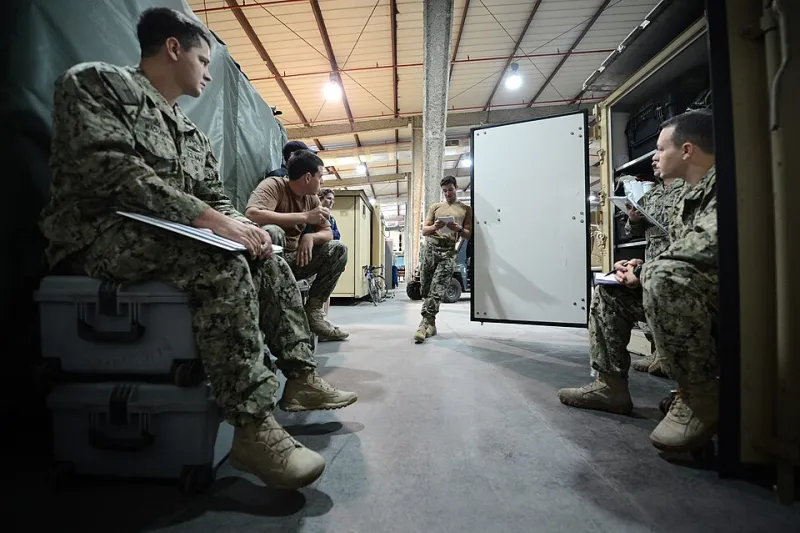
Photo: MC1 Michelle L. Turner, Public domain, via Wikimedia Commons
In the abstract, switching lubricant suppliers looks like a purchasing decision. On the ground it is an experiment, and like any experiment it produces a result whether or not anyone designed it. The mines that get burned are rarely the ones that chose badly; they are the ones that rolled a candidate product across a fleet on the strength of a sample drum, a price sheet, and a persuasive site visit, then discovered at the six-month teardown that something in the formulation did not agree with their duty cycle.
A 90-day trial is not a bureaucratic delay. It is the cheapest insurance available, because the alternative is discovering the same information on a haul truck that has already been down for eleven hours.
The protocol below is written for a US operation running a mixed fleet — haul trucks, loaders, drills, and a conveyor circuit — and assumes one candidate product in one application class, whether that is an engine oil, a hydraulic fluid, or a gear lubricant. Only the details change with the product; the sequence does not.
Before Day Zero: Setting the Baseline
The trial is only as good as its starting reference. Spend the first two weeks building one.
1. Define the application and the claim under test. 'Better performance' is not a criterion. 'Hydraulic oil that holds viscosity within grade across 2,000 hours at 180°F sump temperature' is a criterion. Write it down before the drum arrives.
2. Select three to five control components. Pick machines with clean service histories, comparable hours, and — critically — the willingness of their operators to keep records. Mix duty if you can: one unit on long haul, one on short cycle, one on a stationary or low-utilization assignment.
3. Pull three baseline oil samples from each control unit. Not one. Three, taken over consecutive service intervals, so the laboratory has a trend line rather than a single point. Keep the same sampling point, the same procedure, and the same lab throughout the trial.
4. Document the incumbent product completely. Brand, product name, viscosity grade, batch, and the certification claims attached to it. A trial with an ambiguous starting point produces an ambiguous verdict.
5. Record the physical baseline. Filter differential pressures, sump temperatures, top-up volumes over the preceding quarter, and any known weep or seep locations. Photograph the breathers and the sample ports.
6. Brief the crews. The people who will notice a change in smell, color, foaming, or consumption are the people running the machines. Tell them what the trial is for and what you want them to report.
Days 0–30: Watch for the Obvious
The first month is about ruling out the candidate, not proving it. Most incompatibilities announce themselves early if anyone is watching.
7. Log top-up volumes weekly. Rising consumption is the earliest and most reliable signal of a formulation mismatch — a seal swelling incorrectly, a base oil flashing off, a fluid foaming in the reservoir.
8. Check compatibility at the interface. If the candidate is going into a system that previously ran another product, verify that the two are compatible before mixing in a working sump, or flush according to the supplier's guidance. A gelled filter is an expensive way to learn this.
9. Inspect breathers, sight glasses, and filter housings at every service. Look for foam, emulsion, sediment, or discoloration. Photograph what you find; memory is unreliable and photographs settle arguments.
10. Take the day-30 sample. Full panel: viscosity at 40°C and 100°C, water, particle count, oxidation, and the wear metals your lab reports as standard. Compare against the baseline trend, not against a generic limit table.
11. Hold a 30-minute review. Maintenance, procurement, and the operator representative. If anything has failed outright, stop the trial here and save the remaining 60 days for a different candidate.
Days 30–60: The Questions That Take Time
Short-term compatibility is settled. Month two is where wear protection and fluid stability start to show themselves.
12. Continue weekly top-up logs and note anything that changed in the operating environment. A heat wave, a change in haul profile, or a new blasting pattern can all move the data. Record it so the month-three comparison is honest.
13. Sample at day 60 and read the trends, not the values. Viscosity change, oxidation delta, water ingress rate, and the wear metal generation rate per 100 hours. The absolute numbers matter less than the slope.
14. Pull a filter cut or a magnet check on one control unit. This is the step most trials skip, and it is often the most informative — fines captured on a filter tell you what the oil analysis may not have concentrated yet.
15. Survey the operators directly. Ask about cold-start cranking, hydraulic response at shift start, foaming during cycling, and any change in noise or drift. Their impressions are not data, but they are hypotheses worth a laboratory check.
16. Verify the paperwork trail. Certifications, batch traceability, and delivery lead times are part of the product. A formulation that performs beautifully and arrives three weeks late is not a pass.
Days 60–90: Fleet-Level Signals
By month three the question shifts from 'does this product work' to 'does it work within our system.'
17. Take the day-90 sample and compare all three points on one chart. Three samples in a consistent series is enough to see a trend and to catch a problem that a single reading would hide.
18. Reconcile consumption and cost. Total liters consumed, not just price per liter. A product that costs eight percent more and reduces top-up by fifteen percent is cheaper.
19. Check the storage and handling fit. Drum labeling, pallet configuration, hose and pump compatibility, and whether the product behaves well in your dispensing equipment at winter temperatures.
20. Ask whether your laboratory is measuring the right things. If the candidate's claimed advantage is oxidative stability, make sure your panel actually reports an oxidation indicator. A trial cannot detect what nobody is testing.
The Verdict: Pass, Fail, or Extend
Set the decision rule before the trial starts, and apply it on the evidence.
Pass if the candidate meets the written criterion, generates no adverse trend in water, viscosity, or wear metals, shows no handling or supply problem, and survives the operator survey without a pattern of complaint.
Fail if any control component shows a trend reversal that cannot be attributed to an operating change, or if supply and traceability cannot be relied upon.
Extend if the data is clean but thin — for example, if a control unit logged fewer hours than planned. Extending to 120 days is reasonable; extending indefinitely while a fleet waits is not.
After the Verdict: What to Keep
The trial ends; the discipline should not. Carry the control-unit framework into the full rollout and keep sampling the same components through the first six months of live service. The units that told you the truth during the pilot will tell you the truth again when the volumes go up and nobody is watching quite so closely. That continuity — baseline to pilot to fleet — is what turns a purchase order into a maintenance record worth trusting.