Landed Cost Reality Check: The 2026 Math on Importing Industrial Lubricants from Turkey
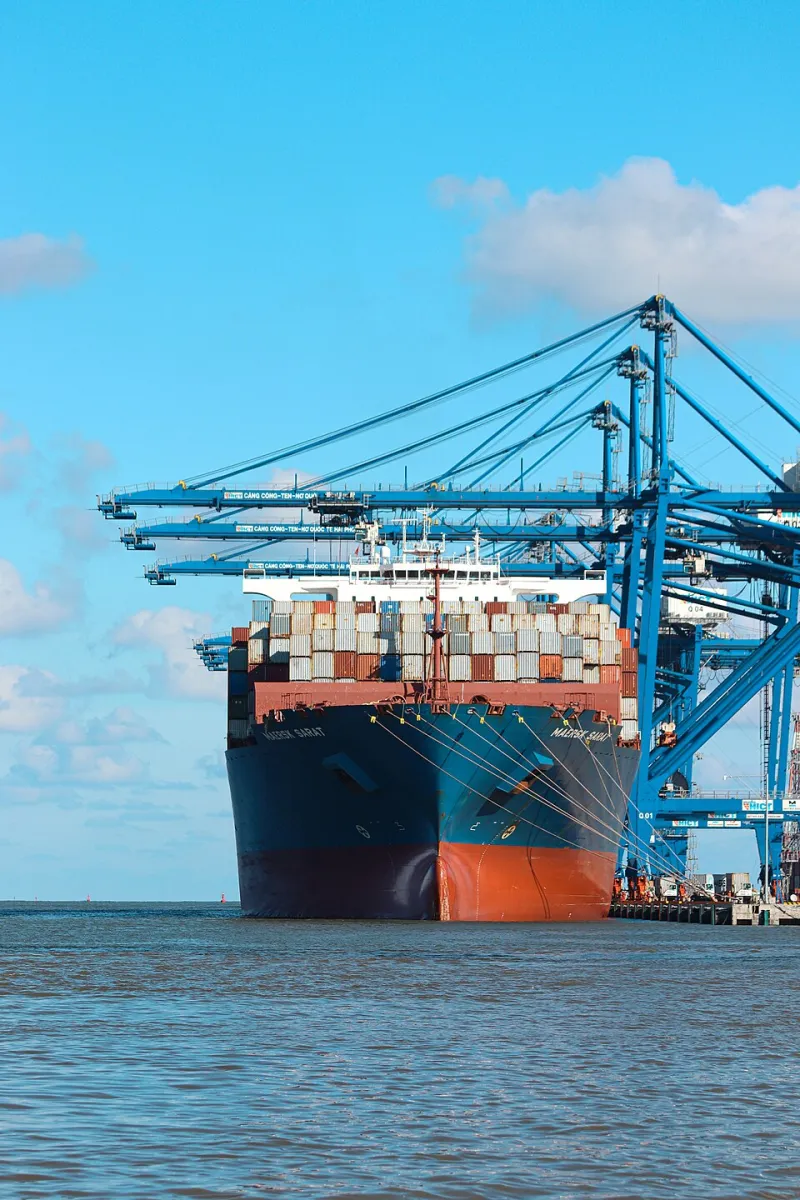
Photo: Nathan.cima, CC BY-SA 4.0, via Wikimedia Commons
Every few weeks, a procurement manager somewhere in the American West runs the numbers on imported lubricants, gets excited by the ex-works price, and then discovers — usually after the first landed-cost invoice — that the real math is more complicated. This guide is an attempt to put the 2026 numbers on the table honestly, including the scenarios where importing from Turkey genuinely wins, and the ones where it quietly doesn't.
The Duty Picture: Better Than Most Buyers Assume
Industrial lubricants — mineral oils, greases, and most hydraulic fluids — typically enter the US under HTS heading 2710, with duty rates that have historically been modest, often in the range of $0.10–$0.30 per barrel by volume-based classification rather than a heavy ad valorem hit. Synthetic formulations and certain specialty chemistries can fall under different headings, so classification matters. Two practical notes for 2026:
- Confirm your HTS classification in writing with a licensed customs broker before quoting landed cost. Misclassification is the most common source of surprise duties and border delays.
- Section 301 tariffs do not apply to Turkish goods. Turkish-sourced lubricants are not subject to the China-specific tariff layers that affect some competing Asian supply, which is part of why Turkish origin has gained traction with US buyers.
Incoterms: Where Responsibility Changes Hands
The Incoterm you negotiate can swing your effective cost and your risk exposure by double-digit percentages. The three that matter most:
- EXW (Ex Works): Lowest quoted price, highest buyer burden. You arrange pickup in Turkey, inland trucking to a port (Izmir, Mersin, or Ambarli are the usual gateways), export clearance, and ocean freight. Only choose this if you have a freight forwarder you trust implicitly.
- FOB (Free on Board): The seller delivers the goods onto the vessel. You own the ocean leg and beyond. This is the workhorse term for most US import programs and the one we recommend as a starting point for negotiations.
- CIF (Cost, Insurance, Freight): The seller covers the ocean leg to your named US port. Convenient, but sellers often pad freight margins here — always benchmark CIF quotes against your own forwarder's rates on an FOB basis.
The Port and Inland Reality
Turkish lubricant shipments to the US typically transit the Mediterranean, cross the Atlantic, and enter through East Coast or Gulf ports — New York/New Jersey, Savannah, Houston, or Baltimore. Transit runs roughly 18 to 28 days door-to-port depending on routing and transshipment. Add customs clearance, drayage, and inland freight to a Western or Midwestern mine site, and realistic door-to-door lead times land at five to eight weeks for routine orders.
That lead time is the single most important variable in the entire equation — more on that below.
A Working Cost Scenario
Consider a 20-foot container of drummed hydraulic fluid (roughly 80 drums, ~16,000 liters) shipped from Izmir to a mine operation in Colorado:
| Cost Element | Imported (Turkey) | Domestic (Midwest blender) |
|---|---|---|
| Product cost, ex-works | ~$28,000 | ~$34,000 |
| Inland + export (Turkey) | ~$1,400 | — |
| Ocean freight + insurance | ~$3,800 | — |
| Duties, fees, brokerage | ~$900 | — |
| US port, drayage, inland to CO | ~$4,200 | ~$2,600 (delivery) |
| Landed total | ~$38,300 | ~$36,600 |
| Safety stock carrying cost* | Higher (8-wk pipeline) | Lower (2-wk) |
*Estimated at 15–20% annually on the value of inventory held to buffer lead-time risk.
In this scenario, the import's headline product discount (~18%) erodes to roughly a 4–5% disadvantage once logistics and buffer inventory are counted — unless the domestic price reflects a regional supply crunch, which it periodically does.
When Importing Wins
- Volume and commitment. Annual supply agreements with consolidated container shipments spread fixed freight costs thin. At two or more containers per quarter, the math flips decisively in the importer's favor.
- Domestic price volatility. When US base oil markets tighten, domestic quotes spike while contracted international pricing holds. Importers with standing agreements are effectively insured against those spikes.
- Product differentiation. If the imported formulation offers additive technology or OEM approvals unavailable domestically, landed cost becomes secondary to performance value.
When Buying Local Wins
- Low, unpredictable volumes. One-off pallet orders cannot absorb $10,000+ in freight and handling.
- Lean inventory operations. If your site can't carry eight weeks of pipeline stock, the stockout risk outweighs the unit savings. A single emergency air-freight shipment erases a quarter's savings.
- JIT-sensitive maintenance windows. Planned outages with hard dates favor suppliers who can deliver in days, not weeks.
The Practical Playbook for 2026
- Negotiate FOB with a forwarder you control, and benchmark every CIF quote.
- Order in container quantities on a scheduled cadence — LCL (less-than-container) shipments destroy the economics.
- Build a two-container safety buffer before your first order, then let the pipeline carry itself.
- Get HTS classification and broker arrangements locked before the first booking, not after.
- Model landed cost quarterly. Freight rates, fuel, and base oil markets all move; a decision made on last year's numbers is a decision made twice.
The Honest Conclusion
Importing Turkish lubricants into the US is not automatically cheaper, and pretending otherwise does buyers a disservice. It is, however, reliably cheaper under the right conditions: committed volume, disciplined scheduling, and a procurement team that counts every dollar between the blending plant and the mine site. Run your own numbers with the framework above — and if the math works, it works.