Grease Guns and Grudges: Mine Mechanics Sound Off on Changing Lubricant Suppliers
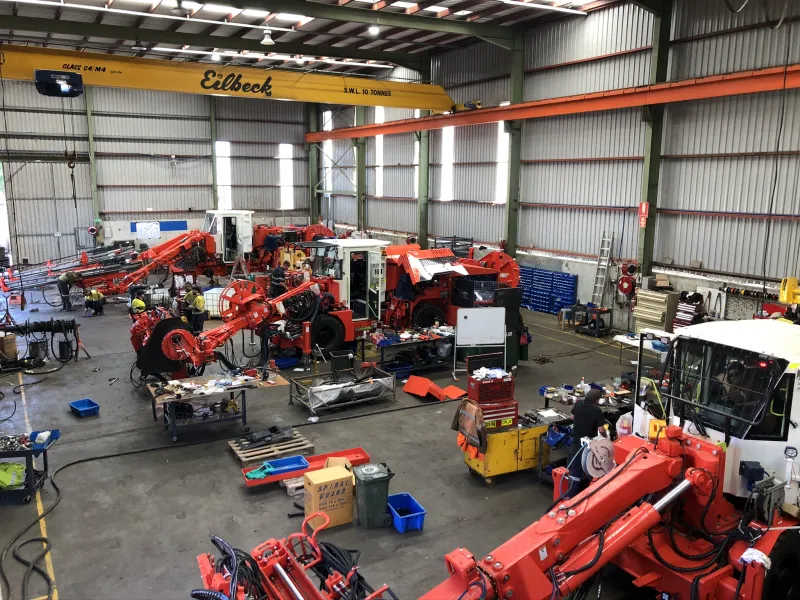
Photo: mine mechanic greasing heavy equipment workshop, via pmmaus.com.au
Every lubricant supplier change is announced the same way: a memo, a meeting, maybe a PowerPoint. What happens next — out in the lube bays, on the mill floors, in the parts cribs of American mining operations — rarely makes it into the procurement file.
We wanted to hear it anyway. So we talked to the people who actually pull the trigger on a grease gun: a veteran field mechanic at a Nevada gold operation, a millwright who's worked three separate supplier transitions at Appalachian coal prep plants, a maintenance planner in the Powder River Basin, and two others who asked that their operations stay unnamed. Their comments have been edited for length and clarity.
The Greaser: "Show Me, Don't Tell Me"
Ray, 31 years turning wrenches, Nevada:
"First time they swapped us to an imported product, everybody figured it was a cost move and we'd be paying for it with failed pins by spring. That's the assumption. You don't get the benefit of the doubt with a crew that's buried bearings before.
"What changed my mind? They put the stuff in one shovel — one loader, one drill, nothing critical — and let us run it for ninety days. We sampled it every month like we do everything else. The numbers came back clean. That's it. That's the whole trick. You don't sell a mechanic on a brochure. You let him watch the oil analysis."
The Millwright: "The Transition Is Where It Falls Apart"
Dana, millwright, Appalachian coal operations:
"I've lived through three of these switches, and the product was never the problem. The changeover was. First time, nobody flushed the old fluid out of a single system — they just topped off. Mixing incompatible thickeners in a bearing is how you make something that looks like paste and protects like nothing.
"The second company did it right. They gave us a compatibility chart, walked every lube point with us, and tagged the systems that needed a full flush before the new product went in. Took two extra weeks. Saved us I don't know how many failures. If a new supplier shows up with a compatibility plan before I ask for one, I already trust them more."
The Planner: "My Job Is the Paper Trail Nobody Reads"
Marcus, maintenance planner, Powder River Basin:
"Here's what nobody tells you about switching suppliers: for six months, every failure gets blamed on the new grease. Fan bearing goes? New grease. Gearbox runs hot? New grease. Even stuff that has nothing to do with it, because the crew knows the transition is the easy answer.
"What got us through it was baseline data. We had twelve months of oil analysis and failure records before the switch, so when something failed we could actually look at the evidence instead of the folklore. My advice to any planner: build your baseline first. It's the only shield you've got."
The Lube Tech: "Train Me or Lose Me"
Cassie, mobile lube technician, Southwest copper district:
"The first supplier change I worked through, they handed us a new product and a new set of quantities — different top-off intervals, different NLGI grades on some points — and zero training. So we did what we always did, with a product that didn't behave the same. Guess whose fault that was on paper.
"The next transition, the supplier sent an actual technical rep out to the pit. Rode along on night shift. Showed us where the application rates differed and why. Took two days. That two days bought more goodwill than any discount ever has."
The Old Hand: "Respect the Skepticism — It's Earned"
Gene, retired after 40 years, still consults for two operations:
"Every crew has one old-timer who's seen five products come and go, and he will sabotage your transition without ever saying a word — just by sighing at the right moments. Smart managers get him on the field trial team. Give him ownership of the data. If the old-timer signs off, the crew follows. If he doesn't, no memo from corporate will save you."
What Actually Convinces a Crew
Across all five conversations, the pattern was remarkably consistent. Nobody was won over by price, brand heritage, or technical data sheets. What moved the needle:
- A limited, real-world field trial on non-critical equipment, with the crew's own hands on the sampling.
- A written compatibility and changeover plan delivered before anyone asked for it.
- Baseline performance data to separate transition folklore from actual failures.
- On-site technical support, especially on night shift, where transitions go to die.
- Respect for the crew's institutional memory — the skepticism exists because someone lived through a failure.
The Takeaway for Procurement
The next lubricant transition at your operation will succeed or fail in the lube bay, not the conference room. Bring your mechanics into the evaluation early, budget for the changeover process itself, and treat the field trial as the real negotiation. The spec sheet gets the purchase order signed. The crew's buy-in is what keeps the machines running.