Proof Over Prejudice: How American Mine Procurement Teams Are Learning to Trust the Spec Sheet Again

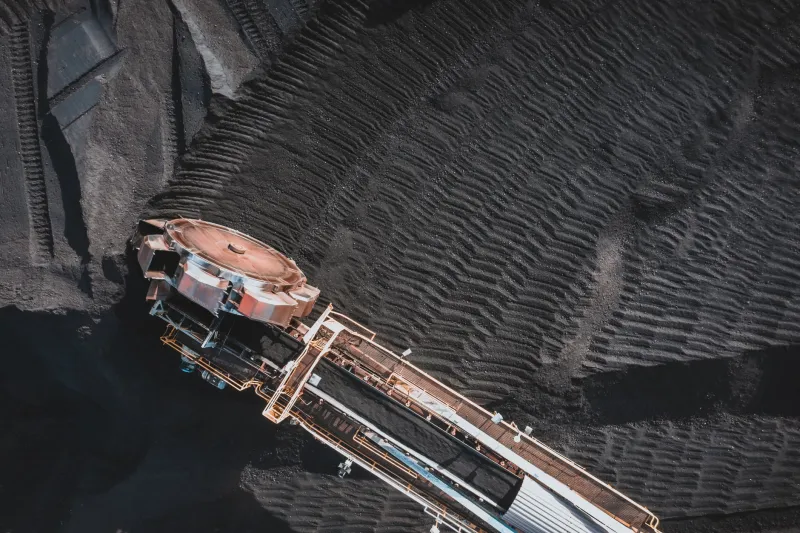
Photo: doe-oakridge, Public domain, via Wikimedia Commons
The Weight of a Label
Ask a purchasing manager at a Nevada gold operation why they buy domestic lubricant, and the answer rarely involves viscosity index or base oil chemistry. More often, it involves a feeling: I know this brand. I know who to call when it fails. That instinct is not irrational — it is decades of institutional memory compressed into a habit. But it is also expensive.
Country-of-origin bias remains one of the quietest line items inflating lubricant budgets across the American mining sector. Products blended in Turkey, Germany, or South Korea routinely meet or exceed the same ASTM and ISO specifications as their domestic counterparts, yet they face a procurement wall that has nothing to do with technical merit. The spec sheet says yes. The buyer's gut says wait.
What the Hesitation Actually Sounds Like
Spend time on the vendor side of a mining RFP and you learn the real objections. They are rarely stated as prejudice — they are stated as risk management:
- "We've never had a supplier from that region before."
- "What happens if a shipment gets stuck in customs mid-quarter?"
- "Who covers a warranty claim if the blend house is an ocean away?"
These are legitimate questions. The problem arises when they are answered with a shrug rather than evidence. A domestic incumbent gets the benefit of the doubt; an international challenger has to prove things the incumbent was never asked to prove. That asymmetry, more than price or quality, is what keeps supplier rosters static year after year.
The Evidence That Actually Moves Buyers
Our conversations with US procurement teams suggest a consistent hierarchy of persuasion. Price alone almost never wins. Spec sheets alone almost never win. What tends to break the hesitation follows a recognizable sequence:
Third-party certification. ISO 9001 manufacturing credentials, OEM approvals, and independent lab verification of batch chemistry do the heavy lifting. A buyer who can hand an auditor a dossier of third-party results has converted an unfamiliar supplier into a documented one.
A bounded trial. Nobody converts a fleet overnight. The programs that work are small and structured — one loader, ninety days, defined oil analysis checkpoints, agreed-upon success metrics. A trial with a fixed scope gives the skeptic a safe way to be wrong.
Warranty skin in the game. When a supplier stands behind its product with a written performance guarantee, the conversation shifts from trusting the vendor to reading the contract. Contracts are something American buyers know how to evaluate.
Referenceability. Nothing closes a procurement debate faster than a peer operation running the product successfully for two seasons. In mining, reputations travel through the pit, not the brochure.
Earning It One Load at a Time
The uncomfortable truth for international suppliers — ourselves included — is that trust in this industry is not granted; it is accrued. Every shipment that arrives on spec, every drum that shows clean on a particle count, every support call answered by someone who understands a Komatsu 930E's final drives, adds a deposit to an account that starts overdrawn.
The suppliers who succeed in the US market are not the ones with the loudest marketing. They are the ones who treat the first order like an audition: consistent documentation, transparent batch testing, honest lead times, and a willingness to say "we don't know" when they don't.
A Changing Calculus
Several forces are loosening the old loyalties. Domestic lubricant price volatility has made buyers more open to qualified alternatives. Supply chain disruptions in recent years demonstrated that "local" does not automatically mean "reliable." And a younger generation of reliability engineers — raised on data, oil analysis, and condition monitoring — tends to evaluate lubricants the way they evaluate bearings: by measured performance, not heritage.
None of this means country-of-origin bias will vanish. Institutions change slowly, and should. But the direction is clear: the American mining buyer is becoming more willing to let evidence lead — and for suppliers who can back their product with certification, trials, and warranties, that shift is an opening.
The label on the drum matters less than what happens after it's opened. Increasingly, US buyers are ready to be shown.