From Cost Center to Performance Driver: How US Mine Operators Are Finally Measuring Lubrication's Bottom-Line Impact
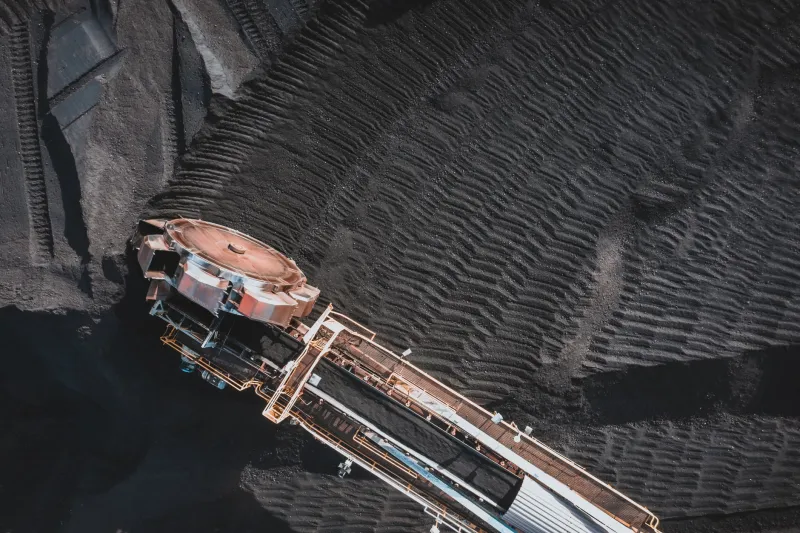
For generations, the lubricant drum sitting in the corner of a maintenance bay was treated much like the utility bill—unavoidable, unglamorous, and rarely scrutinized beyond the invoice total. That perception has proven costly. Across US mining operations, from the copper pits of Arizona to the coal seams of Appalachia, a quiet revolution is underway. Progressive maintenance teams are no longer simply buying lubricants; they are building quantifiable cases for how those lubricants perform, and what that performance is worth in dollars and operational hours.
The shift represents more than an accounting exercise. It reflects a deeper maturation in how the American mining industry thinks about asset management—and it is producing results that are difficult to ignore.
Why the Old Approach Left Money on the Table
The traditional model was straightforward: purchase lubricants based on OEM specifications, apply them on a fixed schedule, and replace components when they failed. It was reactive by design, and its inefficiencies were largely invisible because no one was measuring them.
The problem with invisible inefficiencies is that they compound. A conveyor bearing running on a degraded lubricant does not announce its distress until the failure event occurs. By that point, the cost is no longer just the bearing—it is the unplanned downtime, the emergency labor, the disrupted shift schedules, and the ripple effect through connected equipment systems. Studies across heavy industrial sectors consistently estimate that unplanned equipment failures cost two to five times more than planned maintenance interventions. In high-throughput mining environments, that multiplier can be even more punishing.
What forward-thinking operators have recognized is that lubricant quality and application strategy sit at the root of a surprising percentage of these failure events. The question was never whether lubrication mattered—it was whether anyone was tracking the evidence well enough to prove it.
The Metrics That Make the Case
Building a credible lubrication ROI argument requires a specific set of performance indicators, tracked consistently over time. Three metrics have emerged as the most persuasive in boardroom presentations and capital planning discussions.
Mean Time Between Failures (MTBF) is perhaps the most direct measure of lubrication effectiveness. When a mine switches from a conventional mineral oil to a high-performance synthetic formulation on a critical asset class—say, a fleet of haul truck final drives—and tracks MTBF before and after the transition, the data tells a clear story. Operations that have made this transition methodically report MTBF improvements ranging from 20 to 40 percent on targeted equipment, depending on operating conditions and the quality differential between the previous and replacement product.
Asset Lifespan Extension compounds the MTBF gains over a longer horizon. Capital equipment in mining is extraordinarily expensive. A single large-format hydraulic excavator may represent a $3 million to $7 million investment. Extending its productive service life by even 15 percent through superior lubrication practices and contamination control translates into deferred capital expenditure that is immediately legible on a balance sheet. When maintenance teams present this data to CFOs and board members, the conversation about lubricant spending shifts from cost justification to investment optimization.
Energy Efficiency Gains are the metric that often surprises executives encountering this analysis for the first time. Friction is not just a mechanical problem—it is an energy tax. Equipment operating with degraded or mismatched lubricants consumes measurably more fuel or electrical power to perform the same work. In large mining operations running dozens of high-draw machines simultaneously, even a 2 to 3 percent reduction in energy consumption per asset can aggregate into significant annual savings. Some operations have documented fuel savings exceeding $400,000 annually across their mobile equipment fleets after implementing precision lubrication programs, a figure that independently justifies the cost of premium lubricant products many times over.
Building the Data Infrastructure
None of this analysis is possible without deliberate data collection. The operations that are cracking the ROI code have invested in the infrastructure to support it—oil analysis programs that track viscosity, contamination levels, and wear metal concentrations at regular intervals; CMMS (Computerized Maintenance Management System) integrations that correlate lubrication service events with subsequent failure rates; and baseline documentation that captures equipment condition before any program changes are made.
The baseline documentation piece is frequently underestimated. It is tempting to implement a lubrication improvement initiative and then attempt to reconstruct historical performance from incomplete records. That approach produces arguments that are easy to dismiss. Operations that establish clean baselines before making changes—documenting current MTBF, current energy consumption, and current component replacement frequencies—are the ones that can present irrefutable before-and-after comparisons eighteen months later.
For mines that are earlier in this journey, partnering with a technically capable lubricant supplier can accelerate the process considerably. Suppliers with genuine application expertise can assist in designing oil analysis programs, interpreting wear data, and identifying the specific equipment categories where lubrication upgrades will generate the fastest and most measurable returns.
The Compounding Effect of Consistency
One finding that emerges consistently across operations that have implemented structured lubrication programs is that the benefits are not linear—they compound. In the first year, the gains are largely driven by eliminating the most egregious failure points: the over-lubricated bearings generating heat, the under-lubricated gear sets accelerating wear, the contaminated hydraulic systems cycling degraded fluid through precision components.
By the second and third year, the gains shift toward systemic improvements: longer service intervals enabled by higher-quality products, reduced lubricant volume consumption through right-sizing application quantities, and a maintenance culture that treats lubrication as a precision discipline rather than a routine chore.
The cultural dimension should not be underestimated. The operations achieving the strongest results are those where lubrication excellence has become a point of professional pride for the maintenance team—where technicians understand why product selection matters, how contamination enters systems, and what the oil analysis data is telling them about equipment health. That expertise does not develop overnight, but its value accumulates steadily.
What the Numbers Mean for Procurement Decisions
The ROI framework changes procurement conversations in a fundamental way. When lubrication spending is evaluated purely as a cost line, the pressure is always toward the lowest unit price. When it is evaluated as a performance driver with documented impact on MTBF, asset lifespan, and energy consumption, the calculus shifts entirely.
A premium lubricant that costs 30 percent more per liter but extends drain intervals by 40 percent, reduces bearing replacement frequency by 25 percent, and contributes to measurable fuel savings is not an expensive product. It is a high-return investment. The operators who understand this are the ones positioning their operations for sustainable competitive advantage—and presenting maintenance budgets that executives approve with confidence rather than reluctance.
The lubrication-reliability equation has always existed. US mine operators are simply, at last, learning to read it.