Compliance in Every Drop: How Lubricant Selection Shapes Your Mine's Environmental and Regulatory Standing

Photo: IAEA Imagebank, CC BY 2.0, via Wikimedia Commons
For most American mining operators, environmental compliance calls to mind tailings pond management, stormwater discharge permits, and dust suppression protocols. Lubricants rarely enter the conversation — until a spill, a failed inspection, or a state enforcement notice forces the issue. The reality is that the industrial fluids coursing through your hydraulic systems, gearboxes, and conveyor drives carry a regulatory footprint that is growing more consequential by the year.
The Environmental Protection Agency has been steadily expanding its oversight of lubricant-related contamination pathways, and state environmental agencies — particularly in mining-intensive states like Nevada, Wyoming, Colorado, and Arizona — have layered additional requirements on top of federal baselines. For operations managers and environmental compliance officers navigating this landscape, lubricant selection is no longer a purely technical decision. It is a legal and financial one.
The Federal Framework: What the EPA Actually Requires
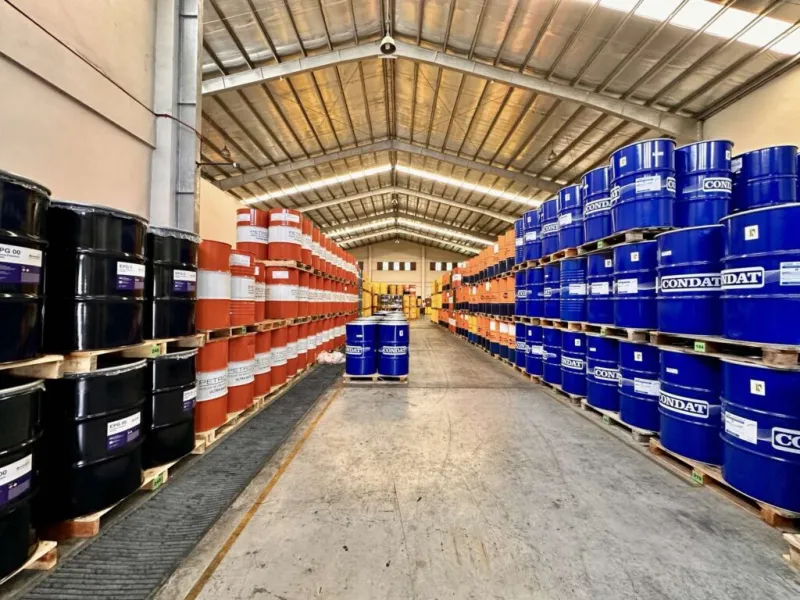
At the federal level, the EPA's regulatory interest in industrial lubricants intersects with several distinct statutory frameworks. The Clean Water Act governs spill prevention and discharge standards, with the Spill Prevention, Control, and Countermeasure (SPCC) rule applying directly to facilities that store oil — including lubricating oils — above certain threshold quantities. Mining operations that maintain bulk lubricant inventories on-site are frequently subject to SPCC plan requirements, which mandate specific containment infrastructure, inspection protocols, and employee training programs.
The Resource Conservation and Recovery Act (RCRA) introduces additional complexity. Used lubricating oil is classified as a regulated material under RCRA, and its disposal — whether through recycling, incineration, or third-party collection — must comply with generator standards that vary based on the volume produced. Operations that generate large quantities of used oil face more stringent tracking, storage, and documentation requirements.
Perhaps most significantly for future planning purposes, the EPA's Safer Choice program and its predecessor initiatives have established a voluntary but increasingly influential framework for identifying lubricant formulations with reduced environmental toxicity. While Safer Choice certification is not currently mandatory for mining operations, several large-scale procurement contracts — including those tied to federal land permits — are beginning to reference it as a preferred or required standard.
State-Level Divergence: Why One-Size-Fits-All Procurement Is a Liability
The federal baseline is only the beginning. State environmental agencies have authority to impose requirements that exceed EPA minimums, and they exercise that authority with considerable variation.
In California, the Department of Toxic Substances Control maintains one of the most restrictive used oil management frameworks in the country, with specific requirements for on-site storage container labeling, secondary containment dimensions, and manifesting procedures that differ meaningfully from federal defaults. Mining operations with California permits — including those in the Mojave Desert region — must maintain compliance with both federal SPCC rules and California's Hazardous Waste Control Law.
Colorado's Department of Public Health and Environment has established spill reporting thresholds for petroleum-based lubricants that are lower than federal SPCC triggers, meaning that a release event that would not require federal notification may still generate a state enforcement response. Wyoming's environmental regulations, while generally less prescriptive than California's, include specific provisions for lubricant storage near watercourses — a relevant consideration for many of the state's coal and trona mining operations.
Nevada, home to some of the most productive gold and silver mining districts in the Western Hemisphere, has incorporated lubricant management requirements into its hard rock mining permits through the Nevada Division of Environmental Protection. Permit conditions frequently specify maximum storage volumes, containment standards, and inspection frequencies that operations managers must track alongside their federal obligations.
The practical implication of this patchwork is clear: a lubricant procurement strategy that achieves compliance in one state may create exposure in another. Multi-site operators face the most acute version of this challenge, as a standardized product specification that satisfies Nevada's permit conditions may fall short of California's more demanding requirements.
How Lubricant Formulation Affects Compliance Risk
Not all lubricants carry equal regulatory risk profiles. The chemical composition of a lubricant — its base oil type, additive package, and viscosity modifiers — directly determines its behavior in a spill scenario, its classification under RCRA, and its eligibility for environmentally preferable procurement programs.
Mineral oil-based lubricants, while effective across a wide range of applications, present higher acute aquatic toxicity risks in spill scenarios compared to certain synthetic and bio-based alternatives. In environments where watercourse proximity creates elevated spill risk — underground mines with sump discharge systems, surface operations near seasonal streams — the selection of a lower-toxicity formulation can meaningfully reduce both environmental impact and regulatory liability.
Synthetic lubricants formulated with polyalphaolefin (PAO) or ester base stocks typically exhibit superior biodegradability and lower aquatic toxicity compared to conventional mineral oil products. For operations seeking to strengthen their environmental compliance posture — or to position themselves favorably for permit renewals and federal land lease applications — these formulation characteristics carry genuine strategic value.
Heavy metal content in lubricant additive packages is another area of increasing regulatory scrutiny. Certain extreme-pressure additives historically employed in gear oils contain compounds that, when present in used oil, elevate the material's hazardous waste classification under RCRA. Selecting formulations that achieve equivalent performance through alternative additive chemistry can simplify used oil management and reduce disposal costs.
Turkish-Sourced Formulations as a Compliant, Cost-Effective Alternative
As US mining operators reassess their lubricant supply chains — driven by both cost pressures and compliance objectives — internationally sourced products have entered serious consideration. Turkish industrial lubricant manufacturers, including Konya Madeni Yağ, produce formulations that are developed against European Union REACH standards and ISO quality frameworks, both of which align closely with or exceed US EPA requirements in key areas.
EU REACH compliance, in particular, provides meaningful assurance regarding restricted substance content — an area of growing relevance as US regulators increase their scrutiny of lubricant additive chemistry. Products formulated to REACH standards have undergone rigorous substance evaluation processes that document chemical composition in ways that support both US regulatory filings and internal environmental management system requirements.
Beyond regulatory alignment, Turkish-sourced lubricants have demonstrated competitive performance in demanding mining applications, offering viscosity stability, oxidation resistance, and extreme-pressure protection comparable to established North American brands — often at a more favorable landed cost. For operations managing tight compliance budgets, this combination of regulatory credibility and cost efficiency represents a genuinely attractive proposition.
Building a Compliance-Centered Lubricant Strategy
The operators best positioned to navigate the evolving regulatory environment are those who treat lubricant selection as an integrated component of their environmental management programs, not an afterthought to equipment maintenance planning.
This means conducting periodic reviews of lubricant specifications against current permit conditions and state regulatory updates. It means maintaining accurate inventory records that support SPCC plan documentation. It means evaluating suppliers not only on viscosity grades and pricing, but on the quality of their technical data sheets, safety data sheets, and regulatory compliance documentation.
The regulatory maze facing American mining operations is not getting simpler. But with deliberate lubricant selection, rigorous documentation, and partnerships with suppliers who understand the compliance landscape, operators can transform a potential liability into a demonstrable strength — one compliance audit at a time.