Synthetic vs. Mineral Lubricants: What US Mine Operators in Extreme Climates Need to Know
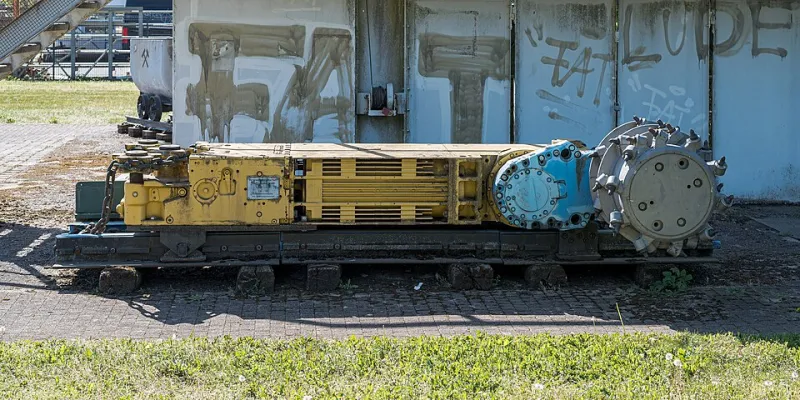
Photo: Flocci Nivis, CC BY 4.0, via Wikimedia Commons
For decades, mineral-based lubricants served as the default choice across American mining operations. They were affordable, widely available, and adequate for moderate working conditions. But as extraction sites push deeper into geographically demanding regions—from the Powder River Basin in Wyoming to the remote gold fields of interior Alaska—the limitations of conventional oils have become increasingly difficult to ignore.
The question facing today's mine operators is no longer simply which lubricant is cheaper per drum. It is which lubricant delivers the lowest total cost across an entire operational season, accounting for equipment downtime, component replacement, energy consumption, and regulatory exposure. When framed that way, the conversation shifts considerably.
What Makes Extreme Climates So Demanding on Lubricants
Mining equipment in northern and high-altitude regions routinely operates under conditions that accelerate lubricant degradation. Winter temperatures in Montana and Wyoming can drop below -30°F, while summer surface temperatures on heavy machinery can exceed 250°F at friction points. This thermal cycling—repeated contraction and expansion of metal components—places enormous stress on any lubricating film.
Mineral oils, derived from refined crude petroleum, carry inherent molecular inconsistencies. Their viscosity changes significantly with temperature, meaning a product that flows adequately in July may become sluggish and insufficient in January. This thickening effect forces hydraulic systems to work harder during cold starts, increasing fuel consumption and placing additional strain on seals and pumps.
Synthetic lubricants, by contrast, are engineered at the molecular level. Base stocks such as polyalphaolefins (PAOs) and synthetic esters are designed with uniform chain structures that resist viscosity breakdown across a far wider temperature range. The result is a lubricant that maintains its protective film whether the ambient temperature is -40°F or well above the boiling point of water.
Breaking Down the Cost Comparison
The upfront price of synthetic lubricants typically runs two to four times higher than comparable mineral-based products. For operations managing tight quarterly budgets, this premium is often the first—and sometimes only—number that enters the purchasing conversation. That approach, however, overlooks several financially significant factors.
Extended drain intervals represent one of the most direct cost offsets. Mineral oils in heavy mining equipment commonly require replacement every 250 to 500 operating hours under demanding conditions. Premium synthetic formulations can extend that interval to 1,000 hours or more, depending on the application and monitoring program in place. Fewer oil changes mean reduced labor costs, less waste disposal expense, and fewer opportunities for contamination during the service process.
Component longevity adds another layer to the calculation. Synthetic lubricants form more durable protective films on gear surfaces, bearing races, and hydraulic components. Operations that have transitioned to full synthetic programs frequently report measurable reductions in unplanned component replacements. A single avoided bearing failure on a large haul truck can offset an entire season's lubricant premium.
Energy efficiency is a quieter benefit, but a real one. Reduced internal friction translates directly into lower fuel consumption—a meaningful consideration when diesel costs represent a significant portion of operating budgets at remote sites.
Alaska as a Case Study in Cold-Climate Performance
Alaska's mining sector provides perhaps the most compelling argument for synthetic adoption. Operations near Fairbanks and throughout the Interior regularly contend with temperatures where mineral oil viscosity can increase by a factor of ten or more compared to summer readings. Equipment manufacturers increasingly specify synthetic lubricants for Arctic-grade applications precisely because conventional products cannot reliably protect components during cold starts.
Operators who have standardized on synthetic lubricants in these environments report fewer hydraulic failures during winter startup sequences and longer intervals between major drivetrain services. While controlled studies specific to individual mine sites are proprietary, the directional evidence from maintenance logs across the sector is consistent.
Environmental and Regulatory Dimensions
Beyond performance and cost, there is a compliance dimension that mineral oil users increasingly cannot afford to overlook. Synthetic lubricants, particularly those formulated with biodegradable ester base stocks, offer improved environmental profiles in the event of spills or equipment leaks. For operations near sensitive watersheds—a common situation across the Rocky Mountain West—this characteristic carries regulatory significance.
The EPA and state-level agencies in Montana, Wyoming, and Alaska have progressively tightened oversight of hydrocarbon contamination at mining sites. A lubricant program that reduces leak frequency and limits soil impact can meaningfully lower an operation's liability exposure. This is a consideration that increasingly appears in investor and insurance conversations as well.
Making the Transition: Practical Considerations
Switching to synthetic lubricants is not simply a matter of substituting one product for another. Compatibility checks with existing seals, a flush procedure to remove residual mineral oil deposits, and updated drain interval protocols are all standard steps in a responsible conversion program.
At Konya Madeni Yağ, our industrial lubricant formulations are developed with these transition requirements in mind. Our technical team works directly with operations to assess equipment specifications, ambient conditions, and operational schedules before recommending a conversion pathway. The goal is not simply to sell a product, but to ensure that the performance and cost benefits of synthetic lubrication are fully realized in the field.
For US mine operators evaluating their lubricant strategy ahead of the next operational season, the data points in one direction. The initial premium of synthetic products is real. So are the savings on the other side of the ledger.