Penny-Wise, Pound-Foolish: The Real Financial Toll of Cutting Corners on Mining Lubricants
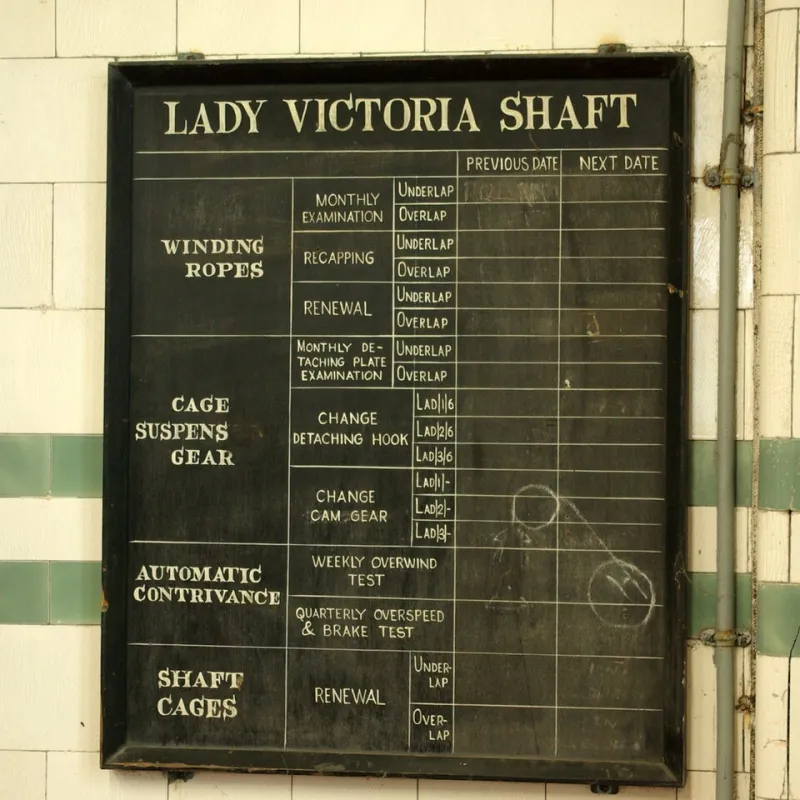
Photo: Robin Webster , CC BY-SA 2.0, via Wikimedia Commons
In mining, margins are tight and pressure to reduce input costs is relentless. When procurement departments review quarterly budgets, lubricants frequently appear as a line item ripe for reduction. The logic seems sound on paper: if two products both claim to meet a baseline specification, why pay more for one than the other?
The answer, as operations managers across the American mining sector have learned at considerable expense, lies in what those specifications do not capture — and in the cascading financial consequences that follow when a lubricant underperforms under genuine working conditions.
The Anatomy of an Unplanned Shutdown
Equipment failure in a mining environment is rarely an isolated event. When a haul truck's final drive seizes due to lubricant film breakdown, the direct repair cost is only the beginning of the financial damage. Consider a mid-size copper operation in Arizona running a fleet of twelve 200-ton haul trucks. A single truck sidelined for 72 hours due to a bearing failure attributable to inadequate lubrication carries the following cost profile:
- Direct repair labor and parts: $18,000–$35,000 depending on component damage
- Lost production: At a conservative 2,000 tons per day per truck, with copper at approximately $3.80 per pound, a 72-hour outage translates to roughly $51,000 in lost ore throughput
- Ripple effects on downstream processing: Concentrator throughput drops when feed consistency is disrupted, adding further revenue impact
- Emergency logistics: Expedited parts shipping, overtime labor premiums, and contractor callouts routinely add 20–30% to the direct repair bill
Total exposure for a single failure event: easily $75,000 to $120,000. The lubricant that was replaced to save $400 per drum now looks considerably less economical.
Case Profile: A Nevada Gold Operation's Lubricant Audit
A gold mining operation in northeastern Nevada conducted an internal audit after experiencing three separate conveyor drive failures within a single quarter. Each failure was attributed to oxidative breakdown of the gear oil being used — a mineral-based product sourced from a domestic supplier at a price point roughly 22% below the operation's previous standard.
The audit revealed that the lower-cost oil's oxidation stability was insufficient for the sustained high-load cycling of the underground conveyor system. Film strength degraded faster than the manufacturer's published interval suggested, leaving metal surfaces inadequately protected during peak load periods.
Over the three-month period, the operation incurred:
- $94,000 in combined repair and parts costs
- Approximately $210,000 in reduced throughput
- $31,000 in emergency contractor fees
The total cost of the switch to a cheaper lubricant: over $335,000. The annual savings projected from the procurement change: $47,000. The math is unambiguous.
Following the audit, the operation transitioned to a high-viscosity-index synthetic gear oil manufactured to tighter oxidative stability tolerances. Failures of the same type have not recurred in the eighteen months since.
Calculating the ROI of Premium Lubrication
The return on investment for a higher-grade lubricant program is not difficult to model, but it requires procurement and operations teams to work from shared data rather than siloed budgets.
A straightforward ROI framework considers three variables:
-
Failure frequency reduction: Premium lubricants with superior additive packages and base oil quality typically extend time between failures on high-stress components. Industry data from the Society of Tribologists and Lubrication Engineers (STLE) consistently shows that contamination control and lubricant quality improvements can reduce bearing failure rates by 40–70%.
-
Extended drain intervals: High-quality lubricants — particularly full-synthetic or high-quality Group III mineral formulations — maintain performance characteristics longer, reducing the frequency of oil changes and associated labor costs.
-
Component life extension: Proper lubrication is the single greatest determinant of component longevity in mining equipment. A crusher bearing that lasts 18 months instead of 11 months under better lubrication represents thousands of dollars in deferred capital expenditure.
When these three factors are applied to a realistic annual lubricant spend for a mid-size surface mining operation — typically $180,000 to $400,000 per year — the incremental cost of upgrading to a premium-tier product is often recovered within a single avoided failure event.
Why Sourcing Matters as Much as Specification
Product specification alone does not guarantee performance. Manufacturing consistency, additive quality control, and base oil sourcing all influence whether a lubricant performs as labeled under the extreme conditions of US mining operations.
At Konya Madeni Yağ, our industrial lubricants are formulated with this operational reality as the design standard, not an afterthought. Produced in Turkey's industrially sophisticated Konya region — a manufacturing hub with deep ties to heavy equipment and industrial processing sectors — our products undergo rigorous quality protocols aligned with international standards including ISO and DIN specifications relevant to mining equipment manufacturers.
US mine operators sourcing from Turkey benefit not only from product quality but from supply chain diversification. Dependence on a single domestic supplier creates procurement vulnerability; a broader sourcing strategy that includes proven international manufacturers provides both competitive pricing leverage and supply continuity.
The Conversation Procurement Teams Need to Have
The most productive shift mining companies can make is moving lubricant decisions out of pure procurement and into a shared conversation between maintenance engineering and finance. When a maintenance engineer can quantify the failure cost history associated with a given lubricant specification, and when that data sits alongside the procurement cost differential, the decision almost always points toward quality.
Cheap lubricants are not cheap. They are expensive lubricants with a delayed billing cycle — one that arrives in the form of downtime reports, emergency purchase orders, and production shortfalls. For US mining operations competing in a demanding commodity environment, that is a cost structure that simply cannot be sustained.