Rethinking Hydraulic Fluid Procurement: Why Turkish-Sourced Products Are Gaining Ground in US Mining
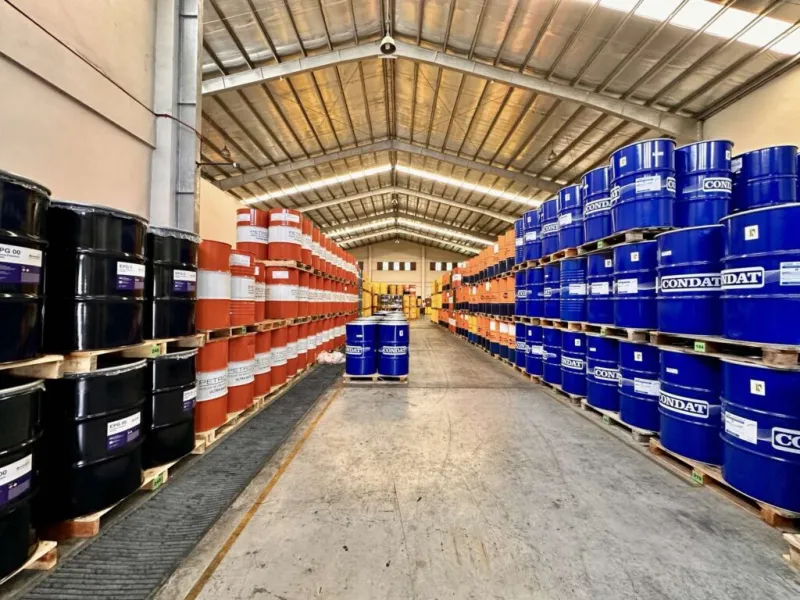
Photo: hydraulic fluid drums industrial mining equipment procurement warehouse, via fluidsolutions.com.ph
The Procurement Problem Facing US Mine Operators Today
For procurement managers at US mining companies, the calculation around industrial lubricants has rarely been straightforward. Hydraulic fluids represent a recurring operational cost that directly influences equipment uptime, maintenance cycles, and ultimately, the profitability of extraction operations. Yet many operators continue to default to domestic suppliers without systematically evaluating whether alternatives deliver superior value.
That calculus is beginning to change. Over the past several years, a measurable number of mining operations—spanning copper extraction in Arizona, coal operations in Wyoming, and potash mining in New Mexico—have introduced hydraulic fluids sourced from Turkish industrial manufacturers into their procurement mix. The results, in several documented cases, have been notable enough to prompt broader re-evaluation across the sector.
Konya Madeni Yağ, based in Turkey's industrial heartland of Konya, has been among the manufacturers at the center of this trend. Understanding why requires looking at both the technical specifications of the products involved and the structural economics of international industrial procurement.
Performance Benchmarks: How Turkish Hydraulic Fluids Compare
The first question any responsible procurement officer will ask is straightforward: do these products perform at the required standard? In the case of hydraulic fluids used in heavy mining equipment—continuous miners, longwall systems, hydraulic shovels, and haul truck hydraulic circuits—the performance envelope is demanding.
Independent laboratory testing conducted on behalf of several US operators has placed Konya-region hydraulic fluids within or above the performance range of leading domestic alternatives across several key metrics:
-
Viscosity stability across temperature ranges: Mining equipment operating in environments from sub-zero Wyoming winters to the heat generated inside deep shaft operations requires hydraulic fluids that maintain consistent viscosity. Turkish-manufactured fluids in the ISO VG 46 and ISO VG 68 categories have demonstrated viscosity index ratings competitive with premium domestic products.
-
Anti-wear additive retention: A primary function of hydraulic fluid is protecting pump components from metal-to-metal contact. Extended service interval testing at a copper mine in southern Arizona showed comparable pump wear rates between a Konya-sourced fluid and the incumbent domestic product over a 2,000-hour operational period.
-
Oxidation resistance: In high-pressure hydraulic systems, oxidation of the fluid accelerates component degradation. Thermal stability testing has placed several Turkish formulations within acceptable limits for the demanding hydraulic systems used in US surface mining equipment.
These are not exceptional results—they are, in fact, the point. Turkish industrial lubricant manufacturers have invested substantially in meeting international standards, including ISO, DIN, and OEM-specific approvals. The performance gap that some operators assume exists between domestic and international suppliers is, in many product categories, marginal to nonexistent.
The Cost Structure: Where the Real Advantage Emerges
If performance parity is the baseline, the economic argument for Turkish-sourced hydraulic fluids becomes the primary driver of procurement decisions. The cost advantage operates across several dimensions.
Unit pricing: Depending on volume, grade, and contract terms, Turkish hydraulic fluids have been procured by US operators at price points 12 to 22 percent below comparable domestic products. For a mid-sized surface mining operation consuming several thousand gallons of hydraulic fluid per quarter, this differential translates into meaningful annual savings.
Volume contract flexibility: Turkish manufacturers, including Konya Madeni Yağ, have demonstrated willingness to structure supply agreements around the irregular demand patterns common in mining—accommodating seasonal fluctuations and project-specific volume requirements without the pricing penalties that can accompany similar requests to domestic distributors.
Inventory management: Several US operators have reported that establishing direct supply relationships with Turkish manufacturers has allowed them to consolidate their hydraulic fluid inventory to fewer SKUs, reducing warehousing complexity and the working capital tied up in lubricant stock.
Supply Chain Considerations: Risks and Mitigations
The honest analysis must address the legitimate concerns that arise when introducing an international supplier into a critical consumables supply chain. Hydraulic fluid is not a discretionary purchase—a supply disruption has direct operational consequences.
Lead times for ocean freight from Turkey to US ports typically range from 18 to 28 days depending on routing and port of entry. For operations on the Gulf Coast or East Coast, this is a manageable planning parameter. For inland operations in the Mountain West, the logistics chain is longer and requires more deliberate inventory buffering.
Several operators who have successfully integrated Turkish hydraulic fluids into their supply chains have done so by maintaining a 60 to 90-day on-site inventory—a modest increase over the 30-day buffer common with domestic suppliers, but one that has proven sufficient to absorb shipping variability without operational disruption.
It is also worth noting that Turkish manufacturers have, in recent years, expanded their North American distribution infrastructure. Bonded warehouse arrangements and US-based distribution partners have shortened effective lead times for some product categories, partially closing the logistical gap with domestic suppliers.
What the Numbers Say: A Composite Case Analysis
Drawing on procurement data and operational reports from three US mining operations that have incorporated Turkish hydraulic fluids over multi-year periods, the following composite picture emerges:
A surface gold mining operation in Nevada reported a 17 percent reduction in annual hydraulic fluid expenditure after transitioning its shovel and dozer fleet to a Turkish-sourced ISO VG 46 formulation. Maintenance intervals remained consistent with manufacturer recommendations, and no hydraulic system failures attributable to fluid performance were recorded during the evaluation period.
A coal preparation facility in West Virginia introduced a Turkish hydraulic fluid for its crusher and conveyor systems. The procurement team cited both unit cost savings and improved supply reliability—the domestic supplier had experienced regional distribution bottlenecks—as drivers of the decision. After 18 months, the facility had recorded no increase in hydraulic component replacement frequency.
A potash operation in southeastern New Mexico evaluated three Turkish hydraulic fluid formulations against its incumbent domestic product in a controlled parallel trial across similar equipment units. Two of the three Turkish formulations matched or exceeded the incumbent product's performance metrics. The operation subsequently transitioned its primary hydraulic fluid procurement to the better-performing Turkish supplier, projecting annual savings of approximately $180,000 on hydraulic fluid expenditure alone.
A Strategic Procurement Lens
The evidence accumulated across these cases does not suggest that Turkish hydraulic fluids are universally superior to domestic alternatives—performance characteristics vary by formulation, application, and operating environment. What the data does suggest is that the assumption of domestic supplier superiority is not empirically supported in the hydraulic fluid category, and that the cost differential available through international procurement is substantial enough to warrant rigorous evaluation.
For US mining operators committed to disciplined cost management, the question is no longer whether to consider Turkish-sourced hydraulic fluids, but how to structure procurement relationships that capture the available savings while managing supply chain risk responsibly. Konya Madeni Yağ and the broader Turkish industrial lubricant sector have demonstrated the technical credibility and commercial flexibility to serve as viable long-term partners in that effort.