The Spec Sheet Crosses an Ocean: A Konya Blender's Notes on Rebuilding Formulations for American Duty Cycles

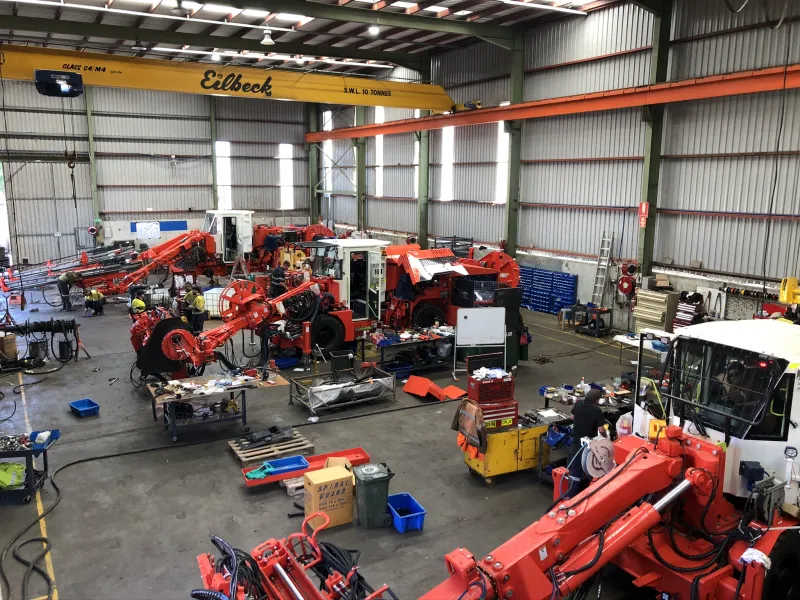
Photo: industrial lubricant blending plant operator at grease manufacturing kettle, via i.pinimg.com
There is a moment in every export project when the formulation brief stops being a document and becomes a list of arguments. It usually happens after the first field data comes back from the destination market and someone at the bench says, plainly, that the product as written will not do what the customer believes it will do. The specification is not wrong. It was written for a machine, an ambient temperature, and a duty cycle — just not the ones now in front of us.
At our blending plant in Konya, we build lubricants for Anatolian conditions: sharp continental seasons, long grades, a fleetscape dominated by mid-size equipment and steady-state operating profiles. When those products travel to US mining, they meet something else entirely. Haul cycles run longer and heavier. Ambient temperatures sit at the extremes for months rather than weeks. Equipment mixes tilt toward very large diesel platforms and high-capacity hydraulic systems. What follows is an account of what generally changes, and why.
Temperature Is the First Variable That Moves
A formulation tuned for a market where winter bottoms out around 5°F and summer tops out near 95°F is not automatically tuned for a site that spends July above 110°F and then drops to single digits in January at altitude. The spread matters more than either endpoint, because it determines whether a single grade can cover the year or whether the product needs a wider viscosity index.
The first levers are base oil selection and the viscosity index improver package. A higher-quality Group II or Group III base stock, or a blend with a higher share of saturates, buys low-temperature fluidity without sacrificing high-temperature film thickness. The VI improver choice is a genuine trade-off: a higher treat rate widens the operating window but adds shear stability risk in a high-load, high-hour application. Where a European duty cycle might tolerate a lighter VI improver, a US haul truck running long cycles at sustained temperature often argues for a shear-stable olefin copolymer at a more conservative treat rate.
Pour point depressants get revisited too, but not reflexively. Adding PPD to solve a cold-start complaint is a common instinct and occasionally the wrong one, since some depressants interact poorly with certain wax structures and can leave a formulation more, not less, prone to gelling.
Base Oils and Viscosity: Matching the Haul Cycle
Grade selection is where the conversation most often becomes uncomfortable, because the honest answer is sometimes that the US customer needs a different viscosity grade than the one they asked for. A product built around a short-cycle, moderate-load profile may be perfectly adequate at a lighter grade in Turkey and marginal in a pit running 12-kilometer haul cycles with loaded grades of eight percent.
The practical adjustment is usually to move up within the grade envelope, or to hold the grade and increase the film-strength contribution from the additive package. The second route costs more and is not always available within the performance claim the product carries, which is why the blender's answer depends heavily on which specification the customer actually needs to meet. Certification claims are not infinitely elastic; a formulation that has been demonstrated against a given performance category cannot simply be re-dosed into a different one without re-testing.
Additive Treat Rates and the Oxidation Margin
Higher sustained operating temperatures accelerate oxidation, and oxidation consumes the additive package from the front end. Detergent and dispersant chemistry, anti-wear and friction modifier levels, and the antioxidant system all get a second look when the destination market runs hotter and longer.
In practice, the adjustment is rarely a wholesale re-dosing. It is more often a rebalancing: a modest uplift in the antioxidant system — phenolic and aminic components read against each other — to build oxidation margin without pushing ash levels beyond what the application can tolerate. In mining, that last constraint is real. High-ash formulations and certain emissions aftertreatment systems do not coexist happily, so the margin has to come from chemistry selection rather than simply from volume.
Anti-wear chemistry follows the same logic. Zinc dialkyldithiophosphate levels are bounded by regulatory and equipment constraints, and past a certain point more is not better — it is merely more. Where extra load protection is needed, it usually comes from a different component: a friction modifier, a boron-containing additive, or a change in the base oil's film-forming behavior.
Greases Are a Different Conversation Entirely
Grease formulations are less forgiving of translation than fluids, because the thickener system sets the whole character of the product. A lithium complex grease built for a moderate-climate application performs well across a wide band, but in a wash-down-heavy US operation with fine silica dust, water resistance and mechanical stability become the dominant requirements rather than secondary ones.
This is where we most often see the thickener reconsidered. Calcium sulfonate complex systems offer strong water resistance and inherent anti-corrosion behavior, at a cost and complexity premium. Aluminum complex greases hold up under water but demand careful handling at high temperature. Polyurea systems behave well in high-temperature sealed applications but dislike mixing with other thickener types — a real problem in a mine where a service truck carries one grease gun and several machines.
The lesson from the bench is unglamorous: compatibility discipline matters more than the specification itself. A perfectly formulated grease introduced into a bearing that still holds a different thickener type does not fail on its own merits.
Elastomers, Seals, and the Quiet Failures
Seal compatibility is the failure mode that costs the most time to diagnose, because it usually presents as an equipment problem long after the lubricant decision was made. Base oil composition drives elastomer swell and shrinkage, and a formulation that is benign to one seal compound can soften another. When we adjust base oil blends for a new market, we ask for the seal material specification — not because we expect an answer in every case, but because the question itself tells us how much of a margin to build in.
What the Gap Teaches Us
None of this makes one market's formulation better than another's. It makes them different, in ways that track the conditions they were built for. The useful takeaway for a US maintenance or procurement team is that a supplier's origin is a starting point for a conversation about duty cycle, not a verdict on quality. Ask what changed in the blend and why. A blender who can walk you through the base oil trade-off, the VI improver choice, and the oxidation margin is a blender who understands that a specification is a hypothesis, and that the machine is the only place it gets tested.