The Handoff Is the Weak Point: Designing Lubrication Programs That Survive Shift Changes
Photo: Alan Hunt, CC BY-SA 2.0, via Wikimedia Commons
Somewhere around 3 a.m., most lubrication programs in American mining quietly stop functioning. Not because a pump fails or a bearing seizes — those come later. They stop functioning because the knowledge required to run them has gone home.
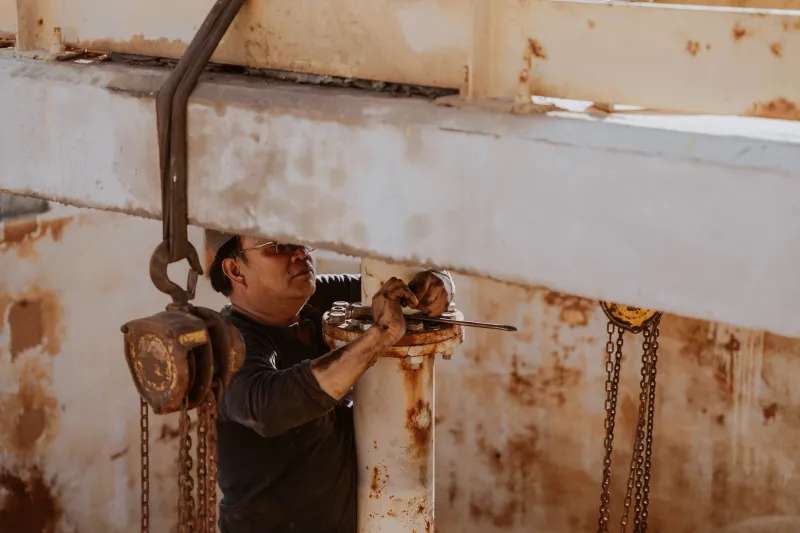
Call it the ghost shift: the hours when grease still gets applied on autopilot, but no one is actually making decisions. The maintenance planner who knows why a specific gear oil was chosen for the ball mill drive is asleep. The reliability engineer who noticed the trend in the last oil analysis report isn't answering calls. What remains is a crew executing a checklist without the context behind it — and checklists without context are where programs begin to erode.
The Problem Isn't the Night Crew. It's the Design.
There's a temptation to blame night shifts for lubrication lapses, and it's a temptation worth resisting. Night crews in US mining operations are generally as competent and committed as day crews. The difference is structural: most lubrication programs were designed by and for people who work days. Documentation lives in their heads. Escalation paths route to their phones. When they leave the site, the program's decision-making capacity leaves with them.
Healthcare faced this exact problem decades ago and responded with a formal discipline around patient handoffs. A nurse coming off a twelve-hour shift doesn't simply leave; they transfer a structured summary of the patient's status, pending concerns, and specific watch items to the incoming nurse. The handoff itself is treated as a high-risk clinical activity, because research consistently showed it was where critical information got lost.
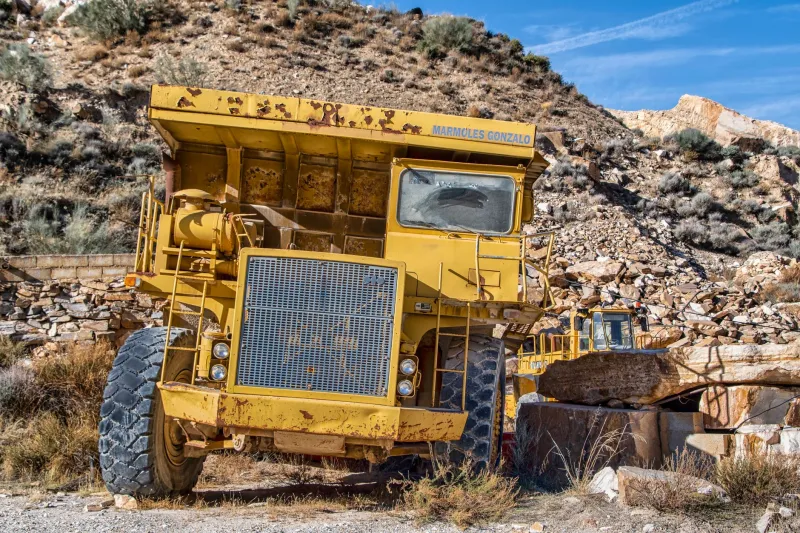
Mining lubrication deserves the same treatment. A large haul truck or an underground hoist is, in a real sense, a patient under continuous care. Yet the typical handoff between crews at a US mine consists of a verbal mention of whatever went wrong that shift — not a structured transfer of lubrication-relevant status.
What a Structured Lubrication Handoff Looks Like
A practical framework doesn't require new software or a consulting engagement. It requires treating the handoff as a defined procedure with four components.
1. A standing status summary. Every active lubrication concern — a gearbox showing moisture trend, a bearing with elevated grease analysis results, a line running slightly off-spec — gets written into a shared log before the outgoing crew departs. Not "keep an eye on the mill," but "mill pinion lube temp trending up 2°F over three days; recheck at 6 a.m. sample."
2. Named escalation with time boundaries. If a night-shift technician encounters an anomaly, who gets called, and under what conditions? If that person is unreachable, who is next? Vague escalation is the same as none. The path should be documented, posted, and rehearsed the same way emergency procedures are.
3. Authority to act. This is where many programs fail outright. If the night crew doesn't have explicit authority to change a grease interval, top up beyond a threshold, or pull an unscheduled oil sample, they won't — and a fixable issue becomes a Monday morning failure. Define what the off-hours crew can decide alone, and make that definition generous enough to matter.
4. A closed loop back. The day planner must read what the night crew wrote and respond. If handoff notes go into a log nobody reviews, the night crew learns within a month that the documentation is theater, and the practice dies.
Why This Matters More as Fleets Modernize
As monitoring sensors and real-time oil analysis spread across US mining operations, there's a quiet assumption that technology will close the shift gap. It won't, by itself. A sensor can flag moisture ingress at 2 a.m.; it cannot decide whether the finding justifies pulling a unit from service. Interpretation and judgment still live in people — and people still work in shifts.
Suppliers see this from a different angle. When we work with operations on lubricant specification and supply planning at Konya Madeni Yağ, the programs that perform best over years aren't the ones with the most sophisticated products. They're the ones where the rationale for every specification is written down, transferable, and independent of any single technician's tenure. Continuity of knowledge is a procurement issue as much as a training issue.
Start Small, Start Tonight
Operations looking to close the ghost shift gap can begin with a single asset class — the highest-consequence equipment on site, whether that's the primary crusher circuit or the longwall hydraulics. Write the standing status summary. Define the escalation path. Grant the authority. Review the loop weekly.
Then expand. Within a quarter, the handoff becomes culture rather than initiative, and the 3 a.m. hours stop being a decision-making vacuum.
The machines don't know what time it is. Your lubrication program shouldn't either.