After Dark, Before Breakdown: Closing the Lubrication Gap on Overnight Shifts
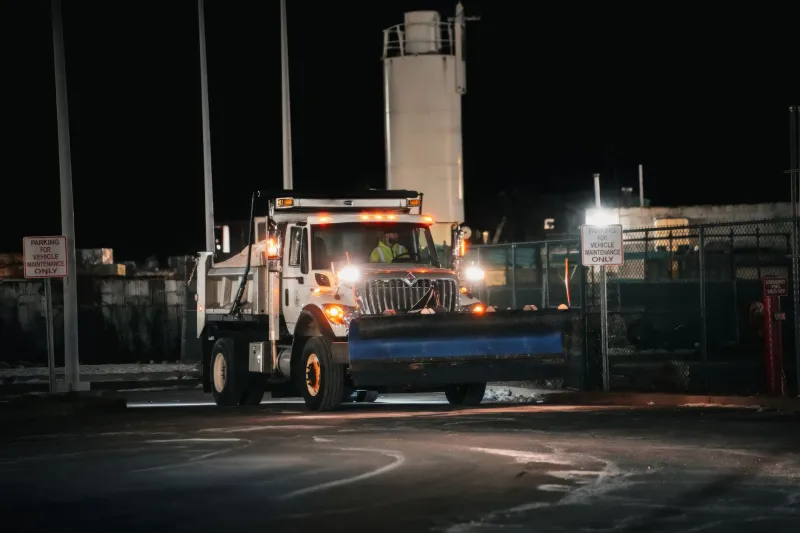
Somewhere around 2 a.m. on a Tuesday, a haul truck at a Nevada gold operation gets topped off with gear oil meant for a different gearbox. Nobody notices. The shift moves on. Three weeks later, the machine is on a lift with six figures in damage, and the root-cause investigation traces back to a decision made in the dark by a technician doing his best with limited information.
Scenarios like this play out across American mines every week. The uncomfortable truth is that lubrication failures rarely distribute themselves evenly across the work calendar. They cluster during the hours when oversight is thinnest — nights, weekends, holidays — precisely when the machines keep running and the maintenance workload doesn't pause.
Why the Third Shift Bears the Burden
Daytime crews typically work under different conditions than their after-hours counterparts. Engineers are on site. Supervisors walk the floor. Questions about product selection or dispensing procedures have someone to answer them.
Strip those supports away and the friction points emerge quickly:
- Ambiguous labeling. A drum with a faded or missing tag becomes a guessing game at 3 a.m.
- Fatigue effects. Research on shift work consistently shows declining attention and slower decision-making in the early morning hours, when complex tasks are more error-prone.
- Compressed routines. Overnight crews often run lean, and greasing rounds are among the first tasks quietly deferred when staffing is tight.
- Incomplete handoffs. If the day shift didn't document a top-off or a pending bearing concern, the night crew may double-apply or skip it entirely.
The result is a reliability gap that shows up in the failure data. Several US-based reliability consultancies have observed that a meaningful share of preventable equipment failures — by some estimates more than half — originate during shifts with minimal technical supervision.
Simplify the Decision, Not the Standard
The most effective fixes don't require more people; they require fewer opportunities to get it wrong.
Color-coded systems have become the workhorse solution. Assigning each lubricant a distinct color — applied to container lids, grease gun handles, fitting caps, and storage locations — turns a product-selection decision into a visual match. A technician who is tired, rushed, or new to the site no longer needs to decode a part number in poor lighting. The green gun goes to the green fittings. Full stop.
Operations that have implemented full color-coding, sometimes paired with numbered dispensing points, routinely report sharp reductions in cross-contamination incidents within the first year.
Automating the Highest-Risk Applications
Some lubrication tasks are simply too critical — or too tedious — to leave entirely to human memory. Single-point automatic lubricators on fans, conveyors, and remote motors dispense a calibrated amount on a fixed schedule, removing the overnight deferral problem altogether. For centralized systems, automated dispensing stations that require badge authentication can prevent the wrong product from leaving the storage area in the first place.
Automation isn't appropriate everywhere, and over-lubrication remains a risk if settings aren't engineered properly. But for the handful of assets that drive most of your downtime risk, it's a proven layer of defense.
Handoffs That Actually Hand Off
The shift change is where accountability evaporates. A fifteen-minute structured handoff — covering which machines were greased, which top-offs are pending, and any abnormal readings — costs almost nothing and closes the information loop between crews. Digital maintenance platforms help, but even a standardized paper checklist beats a hallway conversation that never happened.
An Audit of the Off-Hours
Finally, go look. Walk your night shift with the same scrutiny you'd give a daytime vendor audit. Check the lighting at lube stations. Open the grease cabinet and read the labels. Ask a technician which product goes to the crusher motor and watch how confidently they answer.
At Konya Madeni Yağ, we work with operators who discovered that their most expensive reliability problems weren't caused by bad products or bad technicians — they were caused by good technicians left without the systems to succeed at hours when no one was watching. Fixing that doesn't demand a capital project. It demands attention to the part of the operation that gets the least of it.