Decoding the Drum: A Plain-English Audit Trail for Turkish Lubricant Certifications
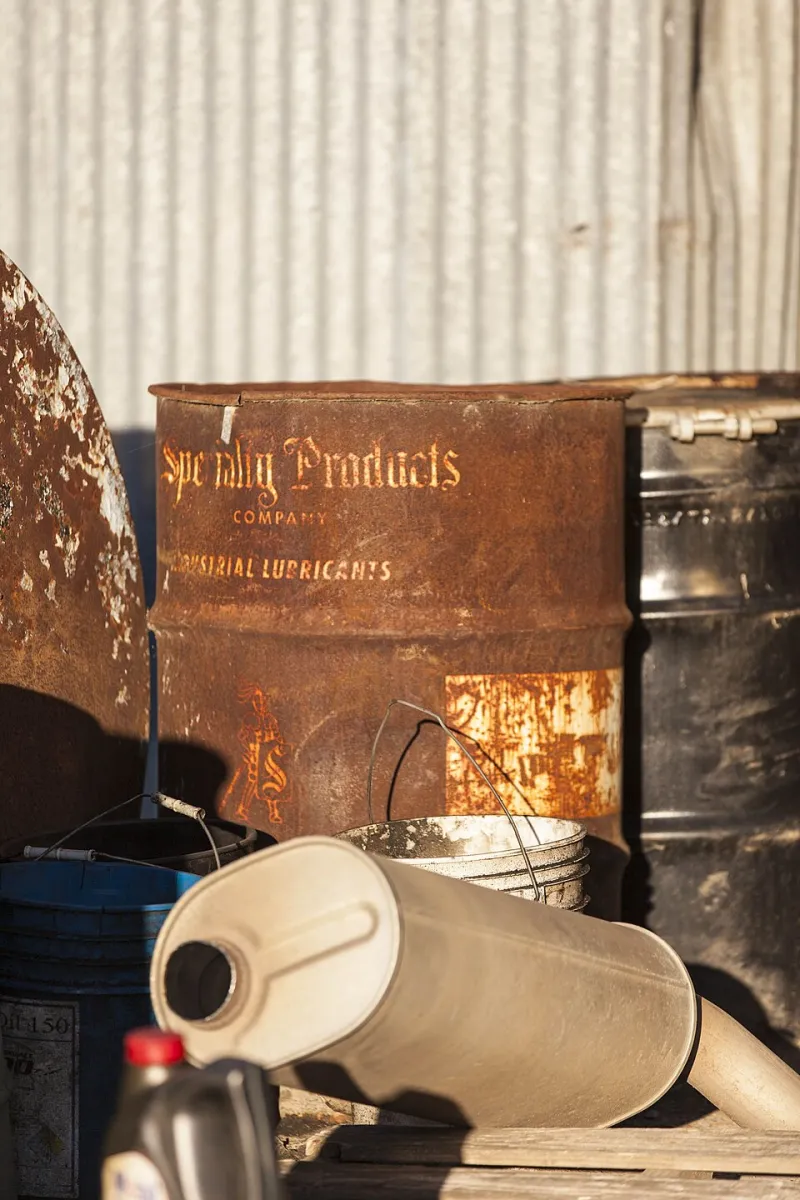
Photo: Gary Shuster, CC BY-SA 3.0, via Wikimedia Commons
The pallet arrives at your receiving dock in Reno or Bisbee or Gillette. The drums look professional, the labels are clean, and the price was right. But somewhere between the loading bay and your maintenance planner's desk, a familiar question surfaces: can we actually trust what's printed on this barrel?
For American buyers evaluating Turkish-sourced industrial lubricants, the paperwork is the product. And unlike a domestic purchase, where you might know the plant, the brand, and the regional rep by name, an import demands a different kind of literacy — one built on standards codes, approval letters, and a healthy skepticism that any good auditor would recognize.
Start With the ISO Designation, Not the Marketing
Every reputable industrial lubricant carries an ISO viscosity grade — VG 46, VG 68, and so on. That number tells you the fluid's kinematic viscosity at 40°C, and it's standardized worldwide under ISO 3448. If a Turkish supplier's documentation lists a viscosity grade without an ISO reference, or worse, uses vague descriptors like "heavy duty" or "all-season" in place of a grade, treat it as your first red flag.
But the ISO grade is only the skeleton. The muscle comes from the specification stack beneath it. Ask for the full technical data sheet (TDS) and the safety data sheet (SDS) in English — not a machine-translated summary. A legitimate exporter will have both prepared for international markets, because they ship to them every day.
OEM Approvals: The Letters That Matter
This is where many buyers get lost, and where a disciplined approach pays off. Major equipment manufacturers — Caterpillar, Komatsu, FLSmidth, Siemens, to name a few — publish formal approval lists for lubricants used in their machines. An OEM approval isn't a marketing claim; it's a documented result of laboratory testing and, frequently, field trials.
When a Turkish lubricant's documentation claims an OEM approval, verify it in three steps:
- Get the approval number or letter reference. Vague claims of "meets CAT requirements" are not the same as holding a formal approval code.
- Cross-check against the OEM's published list. Most major manufacturers maintain current approved-product listings available to customers and distributors.
- Confirm the approval applies to the specific product and viscosity grade you're buying. An approval for one grade in a product family does not automatically extend to its siblings.
If a supplier resists providing documentation at this level, that resistance is itself the finding.
Understanding TSE: Turkey's National Standards Body
The Türk Standardları Enstitüsü (TSE) is Turkey's national standards institute, functionally comparable to ANSI in the United States. A TSE certification mark on a lubricant indicates conformity with Turkish national standards, which for industrial lubricants largely align with ISO and European (CE) frameworks.
For a US buyer, TSE certification is best understood as a signal of manufacturing maturity — evidence that the producer operates under audited quality systems rather than ad hoc blending. It should never be the only standard you rely on, but its absence from a supplier's documentation, combined with missing ISO 9001 certification for the blending facility, should prompt a deeper look.
The Red Flag Checklist
Before signing a purchase order with any overseas lubricant supplier, run through this list:
- No batch-specific certificate of analysis (CoA). Every drum should be traceable to a lab-tested batch. A generic CoA covering "product family" is not adequate.
- Missing ISO 9001 or ISO 45001 certification for the blending plant itself, not just the product.
- SDS in English that reads like a translation error — inconsistent chemical names, missing GHS hazard classifications, or absent emergency contact information.
- No named technical contact. If questions route through a sales inbox with no engineer on the other end, expect problems after the sale.
- Pricing that defies raw-material economics. Base oil and additive costs are globally visible. A quote dramatically below market usually means degraded base stock, recycled product, or documentation that won't survive scrutiny.
- Refusal to provide samples for independent lab testing. Any serious exporter expects American buyers to run their own used-oil and new-oil analysis. This is standard practice, not an insult.
Questions to Ask Before You Commit
Frame your supplier conversations the way an auditor would: specific, documented, and verifiable.
- Which third-party lab performs your batch testing, and can you share a recent report?
- What is your OEM approval status for the exact product and grade quoted?
- Can you provide references from other North American customers?
- What is your traceability protocol from batch number to drum label?
- Who holds liability for a out-of-spec shipment — and is that in writing?
A supplier confident in its quality systems will answer these without hesitation. At Konya Madeni Yağ, we've built our export documentation around precisely these questions, because we'd rather pass a tough audit on day one than lose a customer on day ninety.
The Bottom Line for American Buyers
Imported lubricants are not inherently riskier than domestic ones — but they demand more homework up front. The barrel doesn't lie, but labels can be misread, misapplied, or misunderstood. Treat certification documents as the audit trail they are, verify claims against primary sources rather than supplier summaries, and insist on batch-level traceability.
Do that, and the question at your receiving dock stops being can we trust this drum? and becomes the only question that matters: when can it go to work?