What's Really Sitting on Your Lubricant Shelf: A Compliance Wake-Up Call for US Mine Operators
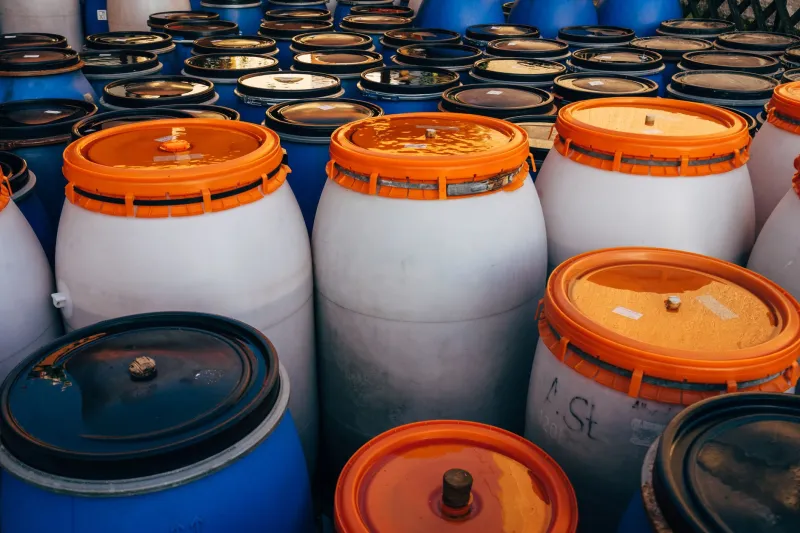
There is a corner in almost every mine's maintenance facility that nobody wants to deal with. It might be a back shelf in the lube room, a row of drums shoved behind the parts storage, or a collection of partially used containers stacked near the wash bay. The contents are rarely labeled consistently. Some cans have no dates. A few products may have been ordered for equipment that was decommissioned two years ago. And somewhere in that pile, there is almost certainly a lubricant that should not be there at all.
This scenario is not an exaggeration. It is the default condition at a surprising number of American mining operations—large and small, surface and underground. And while it may look like a housekeeping problem, what it actually represents is a layered compliance exposure that most site managers do not fully appreciate until an inspector arrives.
At Konya Madeni Yağ, we work with mining customers across multiple continents, and the pattern is remarkably consistent: lubricant procurement gets attention, but lubricant stewardship does not. The result is a storage environment that is neither operationally efficient nor regulatorily defensible.
Why the Lubricant Room Becomes a Problem Over Time
The accumulation of problematic inventory rarely happens all at once. It is the product of small, reasonable-seeming decisions made over months and years. A bulk order arrives just before a seasonal shutdown, and the surplus sits. A vendor substitutes a product during a supply shortage, and the original specification is never revisited. A piece of equipment is retired, but the dedicated lubricant for it stays on the shelf because nobody wants to deal with disposal. A technician grabs whatever is closest when the correct product is out of stock.
Each of these moments seems minor in isolation. Collectively, they create a storage environment where the actual contents of a lube room bear little resemblance to what the purchasing records would suggest. Products get used out of sequence. Containers get relabeled—or not relabeled. Cross-contamination risks multiply. And the paper trail, if there is one, becomes unreliable.
For US mining operations subject to MSHA oversight, EPA hazardous materials regulations, and state-level environmental compliance requirements, this is not a theoretical concern. It is an active liability.
What Inspectors Are Actually Looking For
When a federal or state inspector enters a mine's lubricant storage area, they are not simply checking whether the floor is clean. They are evaluating a set of specific conditions that have direct regulatory implications.
First, they look at labeling. Every container must be clearly identified with its contents, and those contents must match what the Safety Data Sheet on file describes. A drum marked "hydraulic fluid" that actually contains a different viscosity grade or a substitute product from a different supplier is a documentation failure that can escalate quickly.
Second, they examine storage conditions. Lubricants classified as hazardous under EPA guidelines must be stored in accordance with specific containment and ventilation requirements. Improper storage—whether due to incompatible products being kept too close together, inadequate secondary containment, or inadequate temperature controls—can trigger citations under 40 CFR Part 264 or equivalent state regulations.
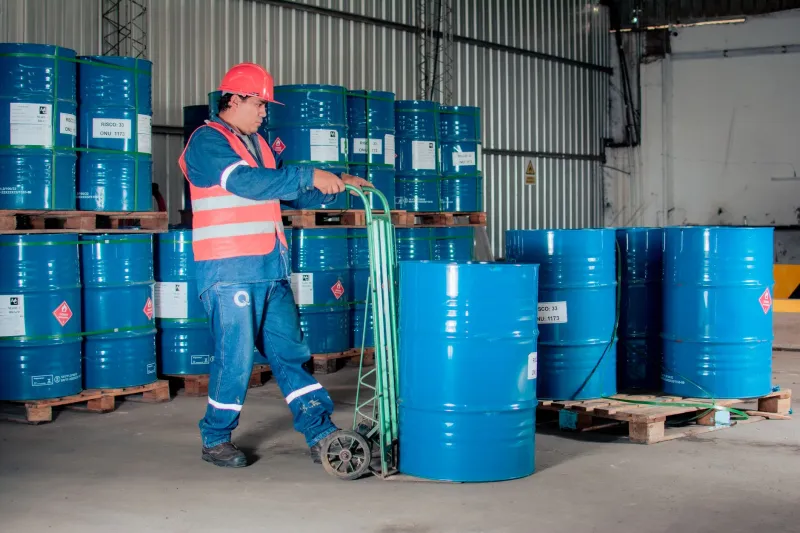
Third, they assess disposal records. Used lubricants are considered hazardous waste under federal law. If a mine cannot demonstrate a documented chain of custody from collection to licensed disposal, it faces significant exposure. Inspectors have become increasingly attentive to this area as environmental enforcement priorities have shifted in recent years.
Finally, and perhaps most importantly for operational risk, they look at whether the lubricants on hand are actually fit for use. Expired products, products stored beyond their manufacturer-recommended shelf life, and products that have been compromised by moisture or contamination are not just waste—they are potential causes of equipment failure that can result in recordable incidents.
Building a Practical Audit Framework
The good news is that a lubricant inventory audit does not require specialized equipment or an outside consultant, although both can be valuable. It requires discipline, a clear methodology, and the willingness to act on what you find.
Step one: Physical inventory reconciliation. Walk the storage area and catalog every container, drum, and bulk tank. Record the product name, supplier, grade, quantity, and the date of receipt if it is visible. Compare this physical count against purchasing records. Discrepancies are the first indicator of where problems exist.
Step two: Shelf-life verification. Every lubricant product has a manufacturer-specified shelf life, typically ranging from one to five years depending on the formulation. Grease, in particular, degrades in storage in ways that are not always visible—thickener systems can separate, oxidation can alter performance characteristics, and base oil can bleed out of the carrier matrix. Any product at or past its recommended use-by date should be flagged immediately for either laboratory testing or disposal.
Step three: Compatibility mapping. One of the most underappreciated risks in a disorganized lube room is inadvertent mixing of incompatible products. Certain grease thickener types—lithium complex and polyurea, for example—are chemically incompatible and can produce a product that performs worse than either component alone. If your storage area contains multiple products that could realistically be confused or mixed during application, that is a process control risk that needs to be addressed through better labeling, segregation, or consolidation.
Step four: Documentation alignment. Your physical inventory should be reconcilable with your Safety Data Sheets, your equipment lubrication schedules, and your hazardous materials manifest. If a product is on the shelf but not on any current equipment specification, it has no business being there. If a product is on your equipment specification but is not the same product currently in storage, that discrepancy needs to be resolved before the next maintenance cycle.
Step five: Disposal planning. Any product that is expired, contaminated, or no longer needed must be disposed of through a licensed hazardous waste contractor. Document everything—the volume, the product identity, the disposal vendor, and the date. This paper trail is your defense in an inspection scenario.
The Operational Case, Not Just the Compliance Case
It is worth stepping back from the regulatory framing for a moment, because the compliance argument alone does not always move decision-makers. There is also a straightforward operational case for getting lubricant inventory under control.
Equipment failures caused by the application of degraded or incorrect lubricants are among the most preventable categories of unplanned downtime in mining. A haul truck wheel bearing that seizes because a technician applied a grease that had been sitting in storage for four years beyond its shelf life is not a mechanical failure—it is a process failure. And the cost of that failure, measured in parts, labor, lost production, and potential injury, will dwarf whatever it would have cost to dispose of the questionable product and replace it with something fit for purpose.
The mines that run with the most reliability are not necessarily those with the most sophisticated equipment. They are the ones that treat every input into their maintenance process—including lubricants—as a controlled variable rather than an afterthought.
Making the Unglamorous Work Count
A lubricant inventory audit will not generate enthusiasm in a pre-shift meeting. It is not the kind of project that gets featured in a company newsletter. But it is exactly the kind of work that prevents the outcomes nobody wants: an EPA notice of violation, an MSHA citation, a catastrophic equipment failure, or an environmental release that triggers remediation costs and reputational damage.
At Konya Madeni Yağ, we believe that the quality of a lubricant program is ultimately measured not just by the products specified, but by the discipline with which those products are managed from receipt to disposal. The audit nobody wants to do is often the one that matters most.